Introduction: The Growing Demand for Metal Plate Laser Cutting
Metal plate fiber laser cutting machines have become indispensable in today’s manufacturing landscape. As industries move toward higher precision, faster production cycles, and reduced operating costs, fiber laser technology has replaced traditional cutting methods such as plasma, oxyfuel, and mechanical shearing. Whether a company is working with carbon steel plates, stainless steel plates, alloy steel, or aluminum plate, fiber laser machines deliver consistent performance and superior cut quality.
Unlike conventional sheet-metal cutting, plate cutting involves thicker materials, larger components, and more demanding tolerances. This shift requires robust cutting power, advanced motion systems, and optimized cooling. Modern fiber laser plate cutting machines are designed specifically for these challenges, making them incredibly valuable across sectors like heavy machinery, construction, shipbuilding, agricultural equipment, and industrial fabrication.
This article explores how metal plate fiber laser cutting machines are constructed, how they perform on various materials, and why they are now considered essential in high-precision plate-processing industries.
Understanding the Structure of Metal Plate Laser Cutting Machines
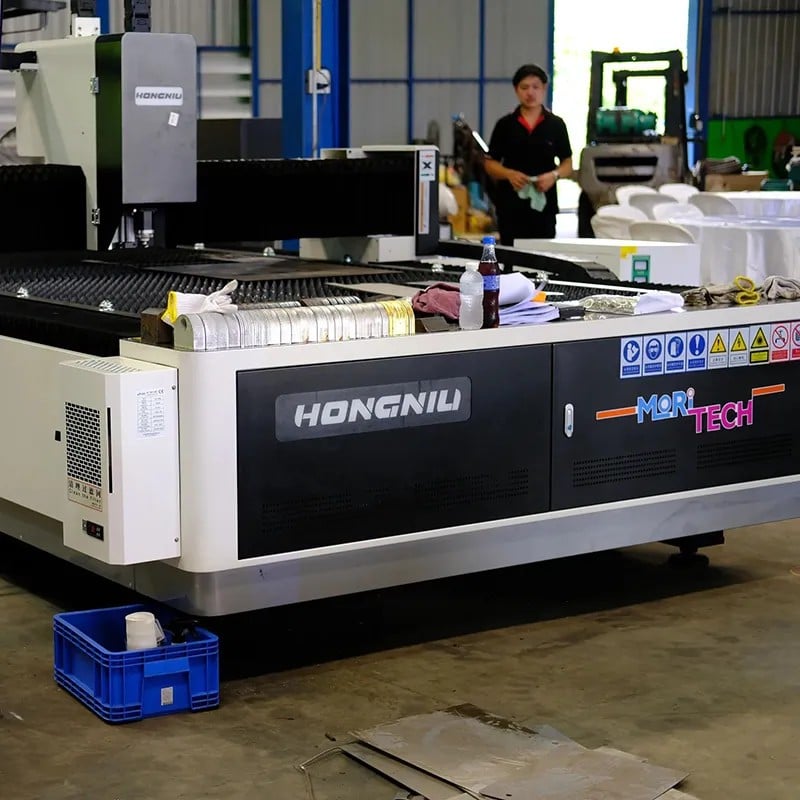
Fiber laser plate cutting machines are engineered for rigidity, durability, and long-term accuracy. Their mechanical build quality plays a fundamental role in how well they perform—especially when cutting plates thicker than 10 mm.
A Reinforced Machine Bed for Heavy Loads
Cutting steel plates requires a workbench capable of supporting large amounts of weight without deformation. Plate laser cutting machines typically use welded steel beds that undergo high-temperature annealing to eliminate internal stress. This ensures the frame remains stable over years of continuous operation, even under the load of thick stainless plates or large carbon-steel sheets.
A stable bed also prevents vibration, which is critical when cutting intricate contours or long straight edges. Even minor vibrations can cause thermal deviation, uneven kerfs, or tapering, all of which affect final part quality.
High-Power Fiber Laser Source
Plate cutting machines commonly use laser sources ranging from 6kW to more than 30kW. High power is essential for efficient processing of thick steel and aluminum plates. A powerful fiber laser delivers:
Faster piercing of thick metal
Cleaner cut edges
Narrower kerf width
Reduced heat-affected zone (HAZ)
Ability to cut reflective materials like aluminum and copper
Brands such as IPG, nLIGHT, Max, and Raycus are typically used in industrial-grade metal plate cutting machines for their stability and long service life.
Heavy-Duty Gantry and Motion System
For cutting thick metal plates, the motion system must be exceptionally rigid and precise. Manufacturers often use:
Cast-aluminum beam structures
Dual-driven gantry systems
High-torque servo motors
Heavy-duty linear guides and ball-screws or rack-and-pinion drives
These components allow the cutting head to move smoothly and accurately across the entire cutting table, ensuring consistent kerf quality even at high power levels.
Advanced Cutting Head with Auto-Focus
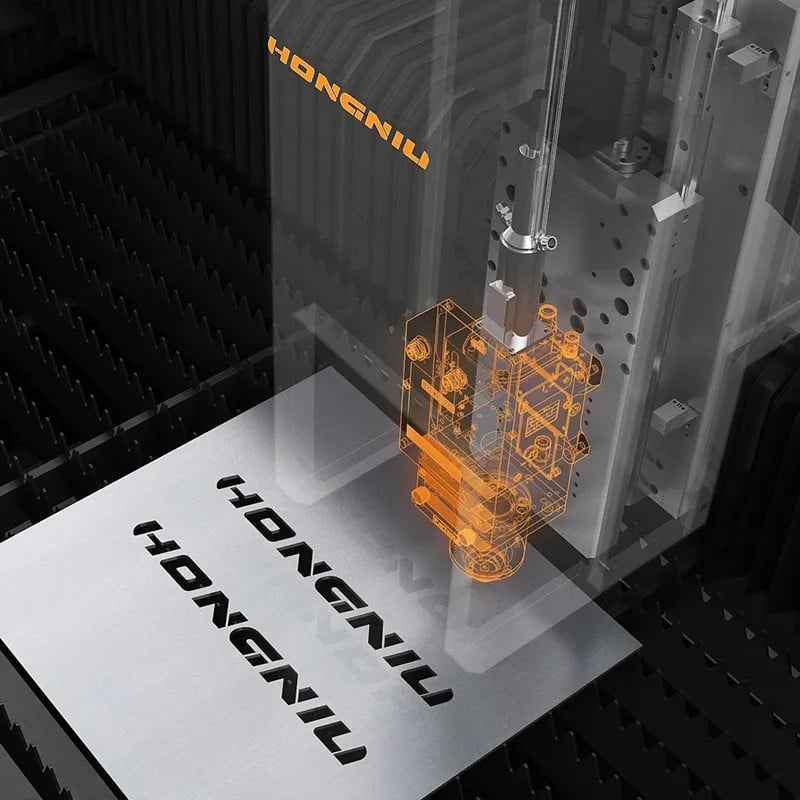
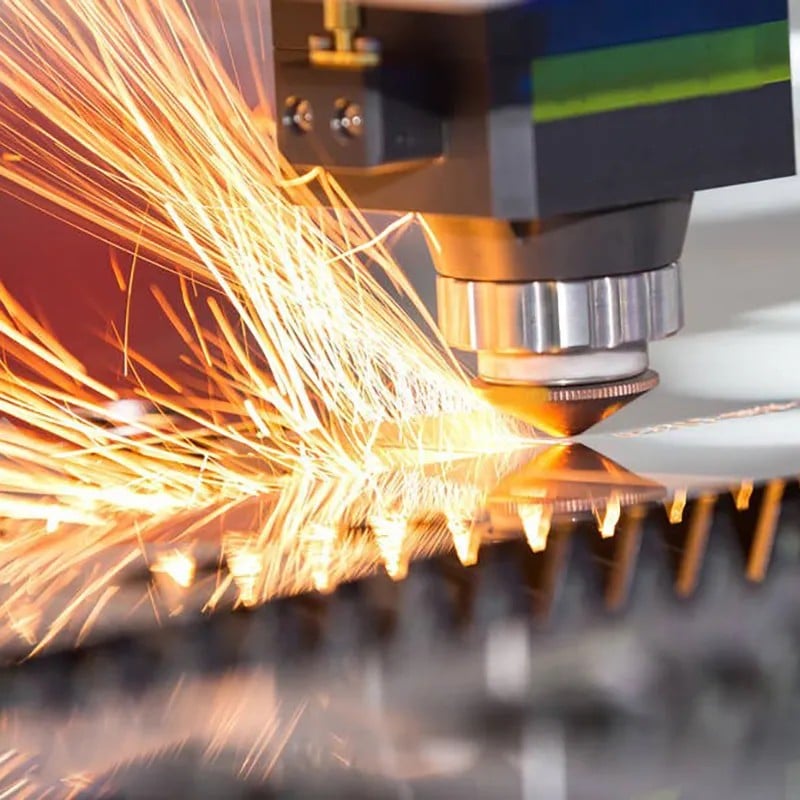
The cutting head is the heart of the machine. Modern plate cutting heads feature:
Auto-focus technology
High-temperature resistance lenses
Anti-collision protection
High-pressure gas capability
Real-time monitoring sensors
Auto-focus ensures optimal beam position for varying thicknesses, while advanced cooling systems prevent overheating during continuous plate cutting.
High-Precision Cutting Performance for Thick Steel Plates
Fiber laser plate cutting machines are engineered to handle materials ranging from 10 mm to 60 mm or more, depending on laser power.
Superior Cutting Quality Compared to Plasma or Flame Cutting
Fiber lasers significantly outperform plasma and oxyfuel cutting in several ways:
Edge Smoothness
Fiber lasers produce clean, smooth edges that need little or no post-processing, whereas plasma and flame cutting often leave rough or oxidized edges.
Smaller Heat-Affected Zone
A narrow HAZ helps preserve mechanical strength and reduces warping—important for precision-fit components.
Better Kerf Accuracy
Laser kerfs are extremely narrow, allowing for precise part matching and high-density nesting.
High Repeatability
Even long production runs maintain consistent quality.
These advantages are particularly important for industries that require high accuracy, such as automotive mold production or high-precision machinery manufacturing.
Cutting Speed and Efficiency
Although plasma cutting can sometimes match laser cutting in thick-plate speed, fiber lasers offer superior overall efficiency due to:
Faster piercing
Cleaner post-cut surfaces
Fewer secondary operations
Higher automation compatibility
A 12kW fiber laser can cut 20 mm carbon steel at remarkable speed while maintaining excellent quality. Newer 20–40kW systems can cut 40–60 mm plate with ease.
Material Versatility
Metal plate fiber laser cutting machines handle a wide variety of materials:
Carbon steel plates — cut quickly and cleanly.
Stainless steel plates — produce bright edges when nitrogen is used.
Aluminum plates — require high power but achieve impressive finish quality.
Galvanized plates — maintain coating integrity with optimized parameters.
Alloy steels — especially suitable for high-strength or heat-resistant materials.
This versatility eliminates the need for multiple cutting systems.
Software, Control Systems, and Intelligent Cutting Features
CNC Software for Plate Cutting
Modern CNC software packages optimize cutting paths, torch height, corner speed, and kerf compensation. Features commonly include:
Smart nesting to reduce material waste
Real-time path visualization
Database of cutting parameters
Automated micro-jointing functions
Geometry correction tools
These software improvements increase cutting accuracy and productivity.
Real-Time Monitoring and Automation
High-end fiber laser plate cutting machines incorporate intelligent modules such as:
Real-time beam stability monitoring
Gas-pressure feedback
Temperature sensors in the cutting head
Automatic break-point tracing
Collision detection
Adaptive focus control
These features reduce scrap rates and improve long-term machine reliability.
Safety Systems and Operator Protection
Since plate cutting often involves high power, machines include:
Enclosed cutting areas
Smoke extraction
Anti-fire systems
Emergency-stop sensors
Overload protection
These systems make high-power plate cutting safer and cleaner.
Maintenance and Longevity of Fiber Laser Plate Cutting Machines
Proper maintenance extends machine life and ensures consistent cut quality.
Routine Checks
Operators typically inspect:
Lens cleanliness
Nozzle alignment
Cooling water purity
Bed leveling
Gas pressure
Fiber connectors
Daily maintenance ensures cutting stability.
Long-Term Durability
With proper care, industrial-grade fiber lasers can operate for more than 100,000 working hours. Reinforced frames and modular component design make the machines suitable for harsh workshop conditions and multi-shift production.
Industrial Applications of Fiber Laser Plate Cutting
Construction and Heavy Machinery
Cutting thick steel plates for beams, brackets, structural parts, and heavy equipment frames.
Shipbuilding and Marine Engineering
Fiber lasers deliver precise cuts on large-format steel plates used in hulls, decks, and marine machinery.
Agricultural and Mining Equipment
Machines used in these industries require thick, wear-resistant steel components that benefit from high-power laser cutting.
Pressure Vessels and Boilers
High-precision steel plate cutting ensures perfect fitment and structural reliability.
Automotive and Transportation Manufacturing
Laser-cut steel plates are used in trucks, trailers, body frames, molds, and specialty vehicles.
Metal Fabrication and Job Shops
Fiber laser plate cutting allows small and medium workshops to undertake large projects previously only possible for heavy-duty factories.
Conclusion: Why Fiber Laser Plate Cutting Machines Are the Future of Industrial Metal Processing
Metal plate fiber laser cutting machines have transformed the way industries process thick metals. Their high precision, incredible speed, material flexibility, and low long-term operating costs make them an essential asset for modern manufacturing. Whether for shipbuilding, heavy machinery, steel-structure fabrication, or automotive applications, fiber lasers outperform traditional cutting methods in both quality and efficiency.
As laser power continues to increase and automation becomes more advanced, fiber laser plate cutting machines will only grow more capable—and more indispensable—in the world of industrial metal manufacturing.
 EN
EN