 EN
EN


OEM manufacturers face relentless pressure to deliver precise, consistent, and cost-effective parts at scale. Integrating a metal cutting laser into a production line directly addresses these demands by combining speed, accuracy, and automation in a single platform. As OEM output requirements grow more complex, the metal cutting laser has become a foundational tool rather than a supplementary option.
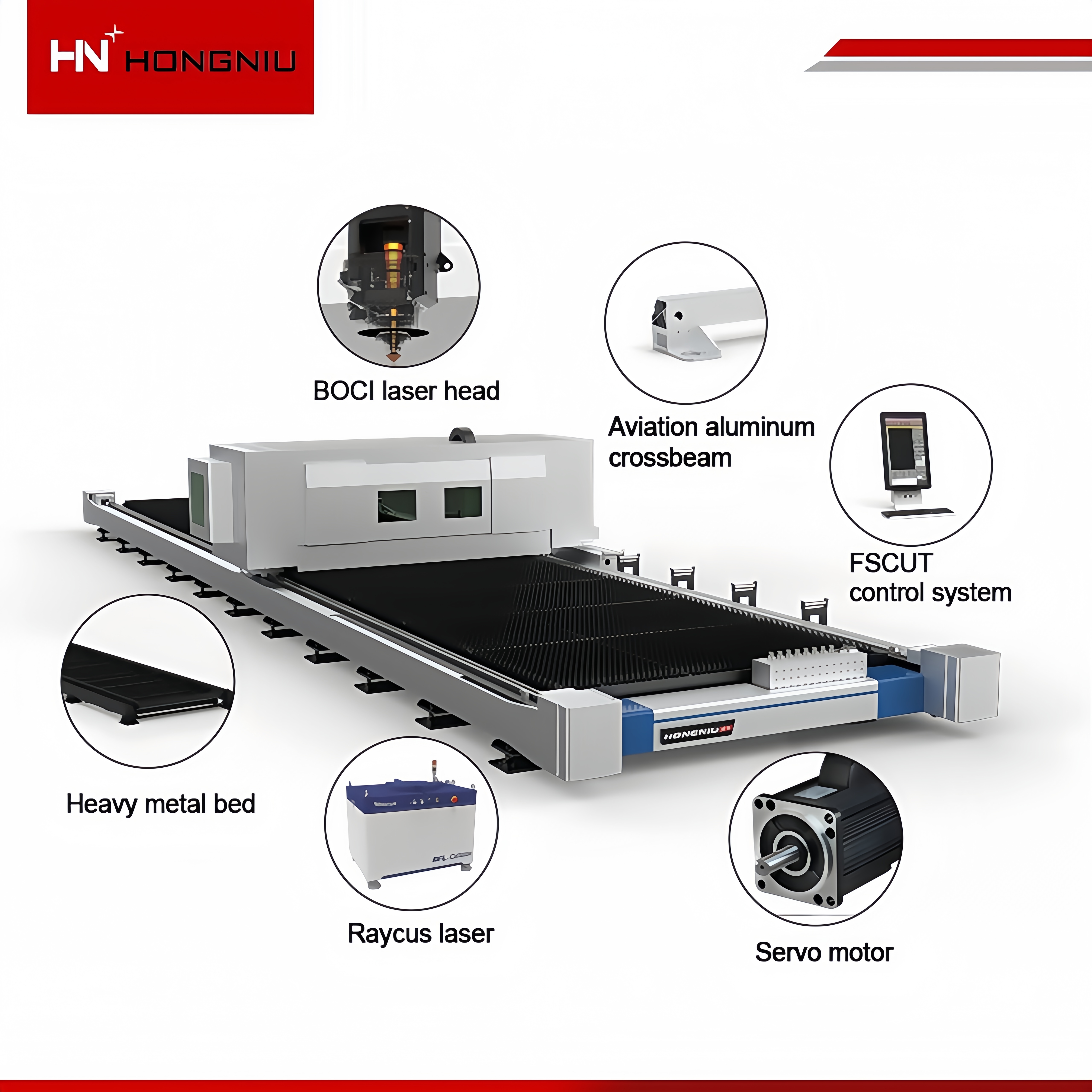
This article examines the specific benefits that a metal cutting laser provides within OEM production environments. From reducing per-part costs to enabling flexible material processing, the metal cutting laser offers measurable advantages that directly improve production outcomes. Understanding these benefits helps OEM decision-makers justify capital investment and optimize their manufacturing workflows.
Precision and Consistency in High-Volume OEM Output
Tight Tolerance Repeatability
In OEM production, every part must meet the same dimensional specification across thousands or millions of cycles. A metal cutting laser achieves this through a focused beam that removes material with minimal deviation from the programmed path. Unlike mechanical cutting methods, the metal cutting laser does not experience tool wear that gradually shifts tolerances over time. Each cut produced by the metal cutting laser maintains the same edge quality and dimensional accuracy as the first, which is critical for downstream assembly processes.
This repeatability reduces inspection overhead and scrap rates. When a metal cutting laser maintains tight tolerances consistently, OEM plants can reduce the frequency of quality holds and rework cycles. The result is a more predictable production rhythm that supports reliable delivery commitments to customers.
Clean Edge Quality Without Secondary Finishing
A metal cutting laser produces smooth, burr-free edges on a wide range of metals including mild steel, stainless steel, aluminum, and copper alloys. This edge quality eliminates or significantly reduces the need for deburring and secondary finishing steps. For OEM operations running high part volumes, eliminating even one finishing step per part creates substantial cumulative time and labor savings. The metal cutting laser effectively compresses the production sequence while maintaining part quality standards.
Speed and Throughput Advantages for OEM Workflows
Rapid Processing Across Material Thicknesses
Modern metal cutting laser systems process sheet metal at speeds that far exceed traditional punching or plasma cutting in many thickness ranges. For thin to medium gauge materials commonly used in OEM component production, the metal cutting laser can complete complex profiles in seconds. This throughput advantage scales directly with production volume, making the metal cutting laser especially valuable in high-mix, high-volume OEM environments where changeover frequency is significant.
Automated coil-fed configurations of the metal cutting laser extend this speed advantage further by eliminating manual sheet loading between cuts. Continuous material feeding keeps the metal cutting laser running with minimal operator intervention, maximizing machine utilization and output per shift. OEM facilities that adopt coil-fed metal cutting laser lines often report significant reductions in cycle time per part batch.
Fast Program Changeover for Multi-Part Production
OEM manufacturers frequently produce multiple part numbers within a single shift or even a single day. The metal cutting laser supports this reality through software-driven changeover. Switching from one part profile to another requires only a program selection rather than physical retooling. This flexibility makes the metal cutting laser a strong fit for OEM operations that serve diverse customer programs simultaneously. The ability to rapidly reconfigure the metal cutting laser without downtime contributes directly to overall equipment effectiveness scores.
Cost Efficiency and Resource Optimization
Lower Operating Cost Per Part
The metal cutting laser achieves a favorable operating cost profile in OEM production through several converging factors. Fiber-based metal cutting laser technology consumes significantly less energy than CO2 laser systems and requires fewer consumable components. Maintenance intervals for a well-maintained metal cutting laser are predictable and less disruptive than those for mechanical cutting equipment. When these factors combine across a full production year, the metal cutting laser delivers a lower cost per part compared to many alternative processes.
Material utilization also improves with the metal cutting laser because tight nesting algorithms can be applied to sheet layouts, reducing offcut waste. Every percentage point of material yield improvement translates to direct savings on raw material costs. For OEM producers working with high-value alloys or stainless steel, the material savings from an optimized metal cutting laser nesting strategy can be substantial over time.
Reduced Labor Dependency
A metal cutting laser integrated with automated loading, unloading, and sorting systems reduces the number of operators required per production shift. Automation-ready metal cutting laser platforms allow a single operator to supervise multiple machines simultaneously. This labor efficiency is particularly relevant as OEM manufacturers face workforce constraints and rising labor costs. The metal cutting laser enables production capacity to scale without a proportional increase in headcount, which improves the overall cost structure of the operation.
Beyond direct labor savings, the metal cutting laser also reduces indirect costs associated with rework, scrap handling, and quality inspection. When parts leave the metal cutting laser already meeting specification, the entire downstream workflow becomes leaner and less labor-intensive. This systemic cost reduction is one of the strongest financial arguments for adopting metal cutting laser technology in OEM production.
FAQ
What materials can a metal cutting laser process in OEM production?
A metal cutting laser can process a broad range of materials commonly used in OEM manufacturing, including mild steel, stainless steel, aluminum, brass, copper, and galvanized sheet. The specific thickness range depends on the power rating of the metal cutting laser system selected. Higher-power configurations of the metal cutting laser extend the processable thickness range while maintaining competitive cutting speeds.
How does a metal cutting laser reduce total production costs in an OEM facility?
A metal cutting laser reduces total production costs through lower energy consumption, fewer consumable replacements, reduced scrap from precision cutting, and decreased labor requirements when integrated with automation. The metal cutting laser also compresses the production sequence by eliminating secondary finishing steps, which reduces work-in-process time and floor space requirements. These combined savings make the metal cutting laser a cost-effective long-term investment for OEM operations.
Is a metal cutting laser suitable for high-mix OEM production environments?
Yes, the metal cutting laser is well-suited for high-mix OEM production because part changeovers are software-driven and require no physical retooling. A metal cutting laser can switch between different part profiles within minutes, enabling efficient production scheduling across multiple customer programs. This flexibility makes the metal cutting laser one of the most adaptable cutting technologies available to OEM manufacturers managing diverse part portfolios.
