High Quality Laser Metal Cutting Machine - Precision Fabrication Solutions

Get A Quote
Get A Quote

high quality laser metal cutting machine

A high quality laser metal cutting machine represents a transformative investment for modern manufacturing facilities seeking precision, efficiency, and versatility in their metal fabrication operations. This advanced equipment utilizes focused laser beam technology to cut through various metal materials with exceptional accuracy and minimal material waste. The core principle involves concentrating a high-powered laser beam onto the metal surface, generating intense heat that melts or vaporizes the material along predetermined cutting paths. Contemporary models integrate sophisticated CNC control systems that enable operators to execute complex geometric patterns and intricate designs with repeatable precision. The technology accommodates a diverse range of metallic materials including stainless steel, aluminum, copper, brass, titanium, and various alloy compositions. Thickness capabilities vary depending on machine specifications, with industrial-grade units capable of processing materials ranging from thin gauge sheets to plates several inches thick. The automated nature of these systems significantly reduces manual intervention, thereby minimizing human error while maximizing production consistency. Advanced features include automatic focal length adjustment, real-time cutting parameter optimization, and integrated quality monitoring systems that ensure each cut meets specified tolerances. The machine's operational software typically offers user-friendly interfaces that simplify programming tasks, allowing operators to import CAD designs directly and convert them into executable cutting programs. Material handling systems, including automated loading and unloading mechanisms, further enhance productivity by reducing downtime between cutting cycles. Safety features such as protective enclosures, emergency stop mechanisms, and fume extraction systems protect operators while maintaining compliance with industrial safety standards. The high quality laser metal cutting machine serves diverse industries including automotive manufacturing, aerospace component fabrication, electronics production, architectural metalwork, signage creation, and custom metal fabrication. Its ability to deliver clean edges with minimal heat-affected zones reduces or eliminates secondary finishing operations, thereby streamlining production workflows and reducing overall manufacturing costs.
Investing in a high quality laser metal cutting machine delivers substantial operational benefits that directly impact your bottom line and competitive positioning. The precision capabilities of laser cutting technology eliminate the need for multiple secondary operations, as edges emerge clean and burr-free, ready for immediate assembly or finishing. This reduction in post-processing steps translates to significant labor cost savings and faster project completion times. Material efficiency stands as another compelling advantage, as the narrow kerf width produced by laser cutting minimizes material waste compared to traditional mechanical cutting methods. The computer-controlled precision enables tight nesting of parts, allowing you to extract maximum value from each sheet of raw material. Production flexibility represents a game-changing benefit for businesses handling diverse project portfolios. Unlike traditional cutting methods that require expensive tooling changes for different designs, a high quality laser metal cutting machine adapts to new patterns through simple software adjustments. This capability enables rapid prototyping and economical short-run production without the traditional setup costs associated with stamping or punching operations. The speed of laser cutting significantly outpaces conventional methods, particularly when processing complex geometries or thin materials. What might take hours using mechanical cutting can be completed in minutes with laser technology, dramatically increasing your throughput capacity. Operational consistency ensures that the thousandth part matches the first with identical precision, eliminating the quality variations that plague manual cutting processes. This reliability reduces rejection rates and builds customer confidence in your production capabilities. The non-contact nature of laser cutting eliminates tool wear entirely, removing the recurring costs of blade replacement and sharpening that burden traditional cutting operations. Additionally, the absence of physical force on the workpiece prevents material deformation, maintaining flatness and dimensional accuracy even with delicate materials. Energy efficiency has improved dramatically in modern laser systems, with fiber laser technology delivering superior cutting performance while consuming less electricity than older CO2 laser models. The reduced thermal input also minimizes heat distortion in the base material, preserving its structural properties and reducing warping issues. Operator safety improves substantially with enclosed laser systems that contain hazardous light emissions and integrate with fume extraction systems to remove airborne contaminants. The automated operation reduces repetitive manual handling, decreasing workplace injury risks. Maintenance requirements remain minimal compared to mechanical cutting equipment, as the absence of consumable cutting tools and fewer moving parts result in reduced downtime and lower service costs. The return on investment becomes evident quickly when you factor in increased production capacity, reduced labor requirements, minimized material waste, and the ability to accept more diverse and profitable projects that would be impractical with conventional cutting methods.

Practical Tips

Why a Laser Metal Cutting Machine Improves Cutting Efficiency?

12

May

Why a Laser Metal Cutting Machine Improves Cutting Efficiency?

In the fast-paced world of industrial manufacturing, efficiency is the metric that defines profitability. For B2B fabrication businesses, the transition from traditional mechanical cutting to advanced Laser Cutting Machines has proven to be the most...
View More
What Thickness Can a Metal Laser Cutter Handle?

12

May

What Thickness Can a Metal Laser Cutter Handle?

Selecting the right industrial machinery requires a deep understanding of technical boundaries. If you are in the market for a metal laser cutter, one of the most critical questions you will face is: "What is the maximum thickness this machine can h...
View More
Fiber Laser Cutting Machine Applications in Metal Fabrication

12

May

Fiber Laser Cutting Machine Applications in Metal Fabrication

The landscape of modern industrial manufacturing has been fundamentally transformed by the advent of fiber technology. In the realm of metalwork, the fiber laser cutting machine stands as the pinnacle of efficiency, precision, and versatility. Unlik...
View More
Why a Laser Metal Cutting Machine Improves Cutting Efficiency?

12

May

Why a Laser Metal Cutting Machine Improves Cutting Efficiency?

Manufacturing efficiency directly impacts profitability and competitive advantage in today's fast-paced industrial environment. Traditional metal cutting methods often struggle with precision requirements, material waste, and production speed limitat...
View More

Get a Free Quote

Our representative will contact you soon.
0/1000
Unmatched Precision Engineering for Complex Fabrication Demands

Unmatched Precision Engineering for Complex Fabrication Demands

The precision capabilities of a high quality laser metal cutting machine redefine what manufacturers can achieve in metal fabrication accuracy and detail complexity. Modern systems deliver positional accuracy measured in thousandths of an inch, enabling the production of components with tolerances that meet the most demanding engineering specifications. This precision stems from the integration of advanced motion control systems that coordinate multi-axis movement with microsecond timing, ensuring the laser beam follows programmed paths with absolute fidelity. The focused laser beam diameter remains consistently narrow throughout the cutting process, producing kerf widths that minimize material removal while maintaining sharp, defined edges. This characteristic proves particularly valuable when fabricating parts with intricate internal features, tight corner radii, or closely spaced cutouts where traditional methods would struggle or fail entirely. The computer numerical control systems governing these machines interpret complex CAD geometry and translate it into precise motion commands without the interpretation errors that can occur with manual programming. Operators can achieve identical results across production runs numbering in the thousands, with each component matching the original specifications exactly. This repeatability eliminates the quality drift that affects mechanical cutting tools as they wear, ensuring consistent output from the first part to the last. The high quality laser metal cutting machine maintains this precision across various material types and thicknesses, automatically adjusting power levels, cutting speeds, and focal positions to optimize performance for each specific application. Advanced sensors monitor cutting conditions in real-time, detecting potential quality issues and making instantaneous corrections before defects occur. This proactive quality management reduces scrap rates and eliminates the costly rework that results from out-of-tolerance parts. The precision extends beyond simple cutting operations to include marking, etching, and engraving capabilities that add identification codes, logos, or functional features without requiring additional equipment or setup time. Manufacturers serving industries with stringent quality requirements such as medical device production, aerospace component fabrication, or precision instrumentation find this accuracy essential for maintaining certification compliance and customer satisfaction. The ability to hold tight tolerances also enables design optimization, allowing engineers to specify thinner materials and reduced safety margins, ultimately creating lighter, more efficient products without compromising structural integrity or performance.
Exceptional Material Versatility Expanding Production Capabilities

Exceptional Material Versatility Expanding Production Capabilities

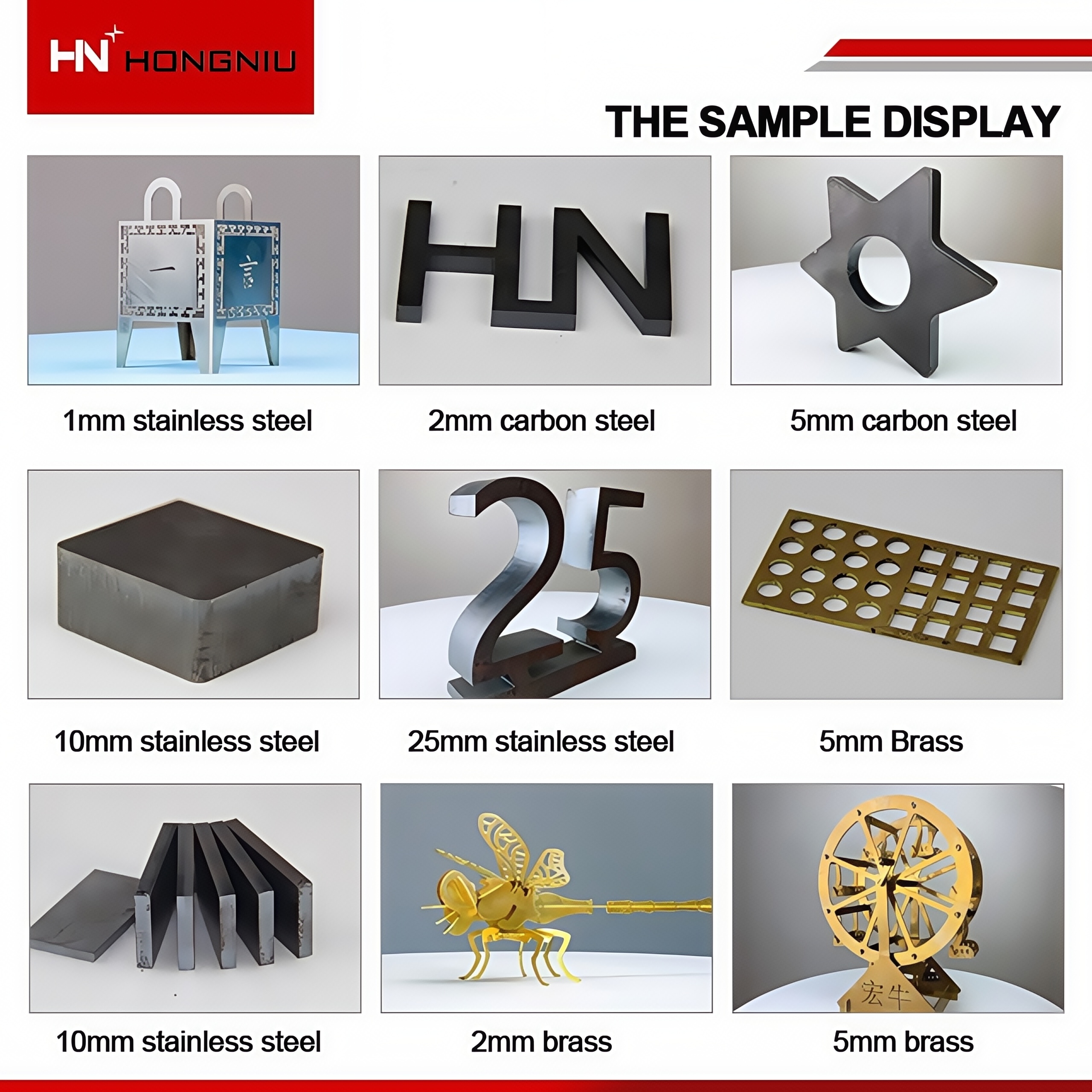
A high quality laser metal cutting machine demonstrates remarkable versatility in processing diverse metallic materials, enabling fabricators to serve broader markets and accept more varied projects without investing in multiple specialized cutting systems. The technology effectively cuts reflective metals like aluminum and copper that pose challenges for many traditional cutting methods, opening opportunities in industries such as electronics manufacturing, heat exchanger production, and decorative metalwork. Stainless steel processing represents a core strength, with laser systems delivering clean cuts through various grades and finishes without compromising surface quality or introducing contamination. This capability proves essential for food processing equipment, medical instruments, and architectural applications where material purity and aesthetic appearance matter significantly. Carbon steel cutting across a broad thickness range accommodates structural fabrication, heavy equipment manufacturing, and industrial component production within a single machine platform. The high quality laser metal cutting machine handles exotic alloys including titanium, inconel, and specialized aerospace materials that demand precise thermal management to prevent metallurgical damage. Advanced laser systems provide the controlled heat input necessary to cut these challenging materials without altering their carefully engineered properties. Brass and bronze cutting for decorative applications, musical instruments, and marine hardware benefits from the laser's ability to produce intricate details without mechanical stress that might cause cracking or deformation. The versatility extends to processing pre-finished materials including powder-coated, anodized, or polished surfaces, with appropriate parameter adjustments preventing damage to decorative coatings. This capability eliminates the need for post-cut finishing operations that add time and cost to production workflows. Multi-material projects become practical when a single machine can seamlessly transition between different metals without tooling changes or extensive setup adjustments. Job shops and contract manufacturers particularly value this flexibility, as it allows them to consolidate operations, reduce floor space requirements, and respond quickly to diverse customer requirements. The high quality laser metal cutting machine adapts to evolving material trends, with software updates and parameter libraries enabling optimization for new alloys and composites as they enter the market. This future-proof characteristic protects your equipment investment against obsolescence, ensuring your cutting capabilities remain current as material science advances. The ability to process both ferrous and non-ferrous metals, reflective and non-reflective surfaces, and materials ranging from razor-thin foils to substantial plate thicknesses within one system represents an operational efficiency impossible to achieve with conventional cutting technologies.
Advanced Automation Driving Productivity and Profitability

Advanced Automation Driving Productivity and Profitability

The automation capabilities integrated into a high quality laser metal cutting machine transform production economics by maximizing equipment utilization while minimizing labor requirements and operational costs. Modern systems incorporate intelligent material handling solutions that automatically load raw material sheets, position them precisely for cutting, and remove finished parts without operator intervention. This continuous operation capability enables lights-out manufacturing scenarios where the machine runs productive cycles during second and third shifts without staffing those periods. The productivity gains become substantial when you calculate the additional production hours captured through automated operation. Automated nesting software analyzes part geometries and optimizes their arrangement on raw material sheets to minimize waste, often achieving material utilization rates exceeding ninety percent. This intelligent placement happens in seconds, eliminating the time-consuming manual layout work while consistently delivering better results than human operators could achieve. The software considers numerous variables including cutting path efficiency, thermal management, and material grain direction to generate optimal cutting sequences that maximize both material usage and production speed. Real-time process monitoring systems track cutting performance parameters, comparing actual results against established benchmarks to identify potential issues before they impact production quality. When deviations occur, automated compensation adjusts laser power, cutting speed, or assist gas pressure to maintain optimal cutting conditions. This self-correcting capability maintains consistent quality without requiring constant operator supervision. The high quality laser metal cutting machine integrates seamlessly with upstream and downstream production systems through industrial communication protocols, enabling true manufacturing integration where customer orders automatically generate cutting programs, trigger material requisitions, and update inventory systems. This digital connectivity eliminates manual data entry errors and accelerates order processing from concept to completed parts. Scheduled maintenance alerts based on actual machine usage rather than arbitrary time intervals optimize service timing, performing necessary maintenance before failures occur while avoiding unnecessary interruptions to production schedules. The automated documentation systems record cutting parameters, material batch information, and quality data for each job, creating comprehensive traceability records that satisfy quality management requirements and support continuous improvement initiatives. Production capacity scales efficiently as your business grows, with a single high quality laser metal cutting machine often replacing multiple conventional cutting stations while requiring fewer operators. This consolidation reduces training requirements, simplifies production scheduling, and creates a more efficient manufacturing footprint that delivers superior output per square foot of facility space.