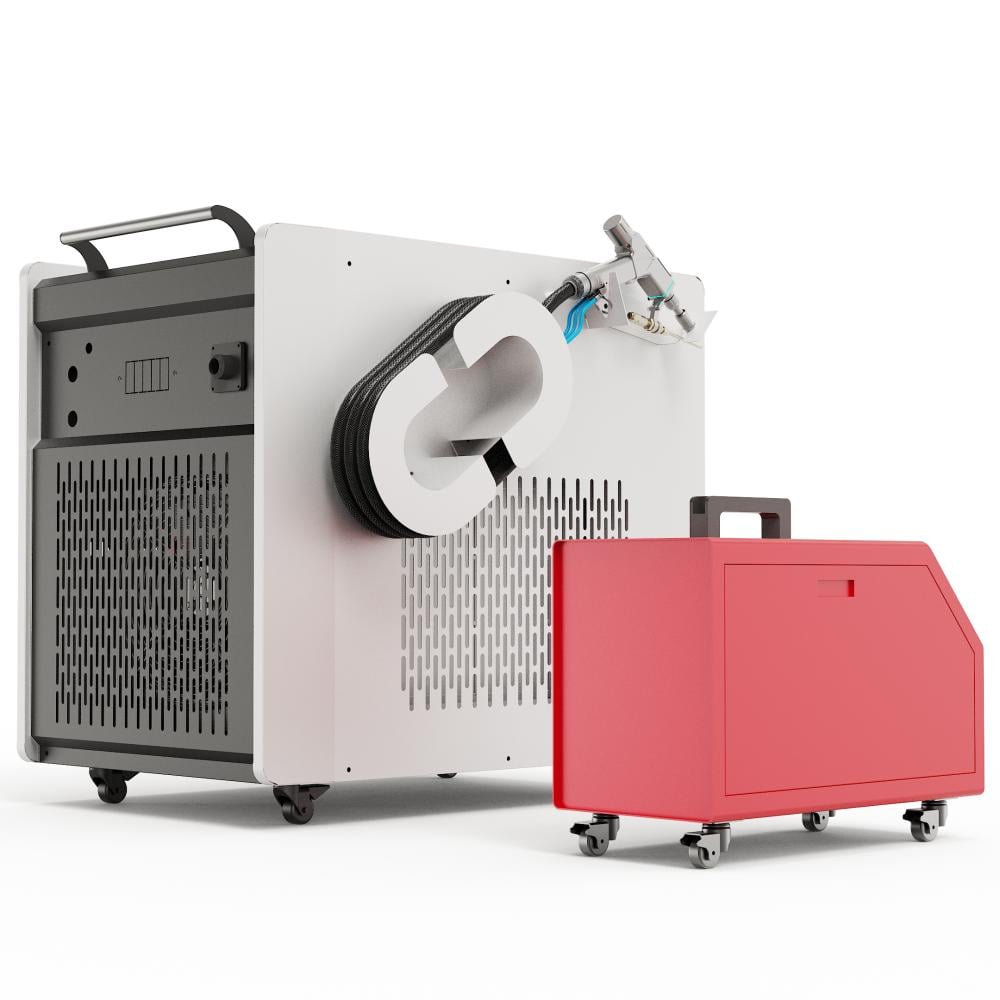
Customized Fiber Laser Solutions - Precision Engineered for Your Manufacturing Needs

Get A Quote
Get A Quote

customized fiber laser

A customized fiber laser represents a sophisticated optical solution engineered to meet specific industrial requirements and operational demands. Unlike standard off-the-shelf laser systems, these precision instruments are tailored to address unique manufacturing challenges, production environments, and material processing needs. The core technology utilizes optical fiber doped with rare-earth elements such as ytterbium, erbium, or thulium as the gain medium, generating highly focused laser beams with exceptional power density and beam quality. The customization process involves careful specification of parameters including wavelength output, power levels, pulse duration, repetition rates, and beam delivery configurations to align perfectly with intended applications. These systems excel in diverse industrial sectors including automotive manufacturing, aerospace component fabrication, medical device production, electronics assembly, and precision metal working. The main functions encompass cutting, welding, marking, engraving, cleaning, and surface treatment across various materials such as metals, polymers, ceramics, and composites. Technological features include outstanding electro-optical efficiency often exceeding 30 percent, compact footprint enabled by flexible fiber architecture, maintenance-free operation due to solid-state design, and superior beam quality characterized by near-diffraction-limited M-squared values. The fiber-based architecture eliminates traditional alignment concerns associated with crystal-based lasers while providing robust performance in challenging production environments. Integration capabilities allow seamless incorporation into automated production lines, robotic work cells, and computer numerical control systems. Advanced cooling mechanisms ensure thermal stability during extended operation cycles, while sophisticated control interfaces enable precise parameter adjustment and process monitoring. The modular design philosophy facilitates future upgrades and performance enhancements as production requirements evolve. Environmental resilience allows operation across wide temperature ranges and humid conditions without performance degradation. These customized solutions deliver consistent output characteristics, minimal downtime, and predictable operational costs, making them strategic investments for manufacturers seeking competitive advantages through advanced material processing capabilities.
Investing in a customized fiber laser delivers tangible operational benefits that directly impact your production efficiency and bottom line. The first major advantage centers on precision tailoring to your exact specifications, eliminating the compromise inherent in generic solutions. Your system arrives configured for your specific materials, thicknesses, processing speeds, and quality requirements, eliminating trial-and-error adjustments and accelerating implementation timelines. Energy efficiency stands as another compelling benefit, with these systems converting electrical input to laser output at rates that significantly outperform conventional laser technologies, translating directly to reduced utility expenses and smaller carbon footprints. The solid-state architecture eliminates consumable components like lamp replacements that plague older laser types, drastically reducing maintenance schedules and associated labor costs. Operators appreciate the user-friendly interfaces that simplify complex parameter adjustments, reducing training requirements and enabling faster workforce integration. Space optimization becomes reality through compact designs that deliver high performance without demanding extensive floor space, particularly valuable in facilities where real estate carries premium costs. The exceptional beam quality enables finer detail work, tighter tolerances, and cleaner edge finishes, reducing or eliminating secondary finishing operations that add time and expense to production workflows. Reliability metrics consistently demonstrate uptimes exceeding 95 percent in properly maintained installations, ensuring production schedules remain predictable and customer commitments stay secure. Versatility across material types and thicknesses means a single investment serves multiple product lines, reducing capital equipment redundancy and simplifying operator training across different production runs. The cooling efficiency of fiber architecture permits continuous operation during extended shifts without performance decay, supporting high-volume manufacturing demands. Software integration capabilities enable data collection for quality assurance documentation, predictive maintenance scheduling, and process optimization analytics that drive continuous improvement initiatives. The customization extends to safety features tailored to your facility requirements and regulatory environment, ensuring compliance while protecting personnel. Return on investment timelines typically range from 18 to 36 months depending on utilization rates, with some high-volume operations achieving payback in under one year. The systems adapt to evolving production needs through software updates and modular hardware enhancements, protecting your investment against technological obsolescence. Vendor support for customized systems often includes application engineering assistance, ensuring you extract maximum value from your laser throughout its operational lifespan. Noise levels remain remarkably low compared to mechanical cutting alternatives, improving workplace conditions and potentially reducing hearing protection requirements. The precision and repeatability eliminate material waste from rejected parts, contributing to lean manufacturing objectives while supporting sustainability goals that increasingly influence purchasing decisions and corporate reputation.

Practical Tips

How Fiber Laser Cutting Machines Reduce Production Costs?

12

May

How Fiber Laser Cutting Machines Reduce Production Costs?

In the competitive landscape of industrial manufacturing, cost optimization is the bridge between a struggling workshop and a market-leading enterprise. For B2B firms specializing in metal fabrication, the equipment on the factory floor dictates the...
View More
Fiber Laser Cutting Machine Applications in Metal Fabrication

12

May

Fiber Laser Cutting Machine Applications in Metal Fabrication

The landscape of modern industrial manufacturing has been fundamentally transformed by the advent of fiber technology. In the realm of metalwork, the fiber laser cutting machine stands as the pinnacle of efficiency, precision, and versatility. Unlik...
View More
How Does a Laser for Cutting Machine Work in Metal Processing?

12

May

How Does a Laser for Cutting Machine Work in Metal Processing?

Understanding the operational mechanics of a laser for cutting machine in metal processing requires examining the sophisticated interplay of light amplification, beam focusing, and thermal energy transfer. These advanced manufacturing systems utilize...
View More
Advantages of Metal Laser Cutting Machines for OEM Factories

08

May

Advantages of Metal Laser Cutting Machines for OEM Factories

OEM factories operating in competitive manufacturing environments constantly seek technologies that enhance precision, reduce waste, and accelerate production cycles. The metal laser cutting machine has emerged as a transformative asset for original ...
View More

Get a Free Quote

Our representative will contact you soon.
0/1000
Precision Engineering Matched to Your Exact Production Requirements

Precision Engineering Matched to Your Exact Production Requirements

The defining characteristic of a customized fiber laser lies in its engineered alignment with your unique manufacturing challenges and operational context. During the specification phase, laser engineers collaborate directly with your production team to understand material compositions, thickness ranges, processing speeds, quality expectations, and integration requirements. This consultative approach ensures the final system addresses not just current needs but anticipates future production evolution. The wavelength selection process considers how different materials absorb laser energy, with options spanning from ultraviolet through visible to infrared spectrums depending on whether you process metals, plastics, ceramics, or composite materials. Power output customization ranges from conservative levels for delicate marking operations to aggressive outputs for thick steel cutting, calibrated precisely to avoid under-powering that compromises throughput or over-powering that wastes energy and capital. Pulse duration configuration determines whether your application benefits from continuous wave operation for deep penetration welding or ultra-short picosecond pulses for cold ablation marking that prevents heat-affected zones on sensitive components. Beam delivery systems receive equal attention, with options including fixed optics for stationary workpieces, galvanometer scanning heads for rapid mark positioning, or robotic arm mounting for three-dimensional part processing. The control architecture integrates with your existing manufacturing execution systems, enabling automated recipe selection, real-time process monitoring, and quality data logging that supports statistical process control initiatives. Environmental packaging addresses your facility conditions, whether that involves sealed enclosures for dusty environments, enhanced cooling for high-temperature locations, or compact configurations for space-constrained installations. Safety interlocks customize to your facility layout and regulatory requirements, incorporating beam path enclosures, access control systems, and emergency stop configurations that protect personnel while maintaining production accessibility. This comprehensive customization approach transforms the laser from a generic tool into a strategic production asset that delivers measurable competitive advantages through superior process capability, reduced operating costs, and enhanced product quality that strengthens customer relationships and market position.
Superior Operational Efficiency Reducing Long-Term Ownership Costs

Superior Operational Efficiency Reducing Long-Term Ownership Costs

The economic advantages of a customized fiber laser extend far beyond initial purchase considerations, fundamentally reshaping your total cost of ownership through multiple efficiency dimensions. The electrical efficiency inherent in fiber laser technology converts input power to usable laser output at ratios approaching 40 percent in optimized configurations, dramatically outperforming carbon dioxide lasers that struggle to exceed 15 percent efficiency and solid-state alternatives hovering around 5 percent conversion rates. This efficiency gap translates directly to utility bill reductions that accumulate substantially over years of operation, with high-utilization facilities experiencing five-figure annual savings compared to legacy laser technologies. The maintenance profile proves equally compelling, as the solid-state fiber architecture eliminates flash lamps, mirrors, and other consumables that require regular replacement in conventional systems. Maintenance intervals extend to thousands of operating hours between service requirements, and when service becomes necessary, the modular architecture enables rapid component exchanges that minimize production interruptions. Cooling requirements decrease substantially compared to alternative laser types, reducing demands on facility HVAC systems and enabling air-cooled configurations in many applications that would require water cooling with other technologies. The beam delivery through flexible fiber optics eliminates complex mirror alignments that drift over time in traditional rigid beam paths, maintaining consistent processing quality without periodic realignment procedures that consume technician time and create process variability. Consumable costs beyond the laser itself also decrease, as the precision and control available through customization reduce assist gas consumption, minimize material waste from rejected parts, and eliminate secondary finishing operations that add processing steps. The reliability engineered into these systems through customization to your operating environment translates to predictable production capacity that enables confident customer commitments and eliminates the revenue losses associated with unexpected downtime. Energy consumption remains consistent across the operational envelope rather than spiking during warm-up periods or degrading during extended runs, enabling accurate production costing and eliminating unpleasant utility surprises. The compact footprint relative to output capability optimizes facility utilization, potentially eliminating expansion needs or freeing space for additional revenue-generating equipment. Training costs diminish through intuitive interfaces customized to operator skill levels and production workflows, reducing the learning curve for new personnel and cross-training requirements when shifting operators between production lines.
Exceptional Versatility Supporting Multiple Applications and Future Growth

Exceptional Versatility Supporting Multiple Applications and Future Growth

A customized fiber laser delivers strategic value through adaptability across diverse applications and materials, protecting your capital investment as product lines evolve and market demands shift. The fundamental physics of fiber laser technology enables processing across material categories that would require multiple specialized systems with alternative technologies, from reflective metals like copper and aluminum through absorptive materials like carbon steel and titanium to non-metallic substrates including certain plastics and composites. This material versatility means a single system supports multiple product families, reducing equipment redundancy and simplifying operator training across different production requirements. The power scalability inherent in fiber architecture allows processing parameter ranges spanning delicate surface marking at micron depths through aggressive cutting of thick plate materials, accommodating both precision electronics components and heavy structural fabrication within the same production facility. Customization extends to software capabilities that store unlimited processing recipes, enabling rapid changeovers between product runs without manual parameter adjustments that introduce variability and consume setup time. The integration flexibility supports diverse production philosophies, whether you operate dedicated manufacturing cells, flexible job shops, or highly automated lights-out facilities, with communication protocols spanning legacy serial interfaces through modern industrial ethernet standards. As your business grows and production requirements evolve, the modular architecture permits capability enhancements through power upgrades, additional processing heads, or expanded automation integration without requiring complete system replacement. The customized configuration anticipates growth trajectories discussed during specification, incorporating expansion pathways that activate as volume justifies enhanced capability. Application diversity extends beyond traditional cutting and welding to encompass cleaning processes that remove coatings, contaminants, or oxides without chemical treatments, marking operations that create permanent identifiers resistant to environmental exposure, and surface texturing that modifies friction properties or appearance characteristics. The precision available through customization enables micro-machining applications requiring feature resolution measured in microns alongside macro-processing of meter-scale components, serving markets from medical device manufacturing through heavy equipment fabrication. This versatility transforms the laser from a single-purpose tool into a platform technology that adapts to emerging opportunities, market shifts, and product innovations throughout its operational lifespan. The investment protection proves particularly valuable in dynamic industries where product lifecycles compress and customer requirements evolve rapidly, ensuring your processing capability remains relevant and competitive regardless of how your business landscape transforms.