 EN
EN
Investing in a Laser Cutting Machine is a pivotal decision for any manufacturing business, whether you are a small-scale specialized workshop or a large industrial plant. This technology represents a significant capital expenditure, but when chosen correctly, it serves as the cornerstone of production efficiency, allowing for high-speed precision that manual methods simply cannot replicate. However, the market is saturated with various models, power ratings, and configurations, making the selection process complex.
To ensure a high return on investment, you must look beyond the initial price tag. The ideal Laser Cutting Machine should align with your specific material requirements, production volume, and the technical skill level of your operators. In the following sections, we will break down the critical technical and operational factors that should influence your purchasing journey to ensure you acquire a system that grows with your business.
Defining Your Primary Material Scope and Power Requirements
The most fundamental consideration is the type and thickness of the material you intend to process. Not every Laser Cutting Machine is built for every material. Fiber lasers are the industry standard for metals—such as carbon steel, stainless steel, aluminum, brass, and copper—due to their wavelength being highly absorbable by metallic surfaces. If your business focuses on organic materials like wood or acrylic, a CO2 system might be more appropriate, but for industrial metal fabrication, fiber is the undisputed leader.
Laser power, measured in Watts or Kilowatts (kW), directly dictates the maximum thickness you can cut and the speed at which the machine operates. A 3kW source is often sufficient for thin sheet metal and light fabrication, whereas heavy-duty industrial applications requiring the processing of 20mm or thicker plates will necessitate 12kW to 30kW systems. Overestimating your power needs leads to unnecessary energy costs, while underestimating them results in poor edge quality and slow production cycles.
Evaluating Machine Configuration and Bed Size
The physical footprint and the working area of the machine are logistical constraints that must be planned for well in advance. The "bed size" determines the maximum dimensions of the raw metal sheets you can load. Standard industrial sizes typically include $1500 \times 3000$ mm or $2000 \times 4000$ mm. Selecting a bed that matches the standard sheet sizes provided by your local material suppliers will minimize waste and reduce the need for pre-cutting raw materials.
Furthermore, consider the machine's architecture. Open-bed designs offer easier access for loading and unloading but lack the safety containment of fully enclosed systems. In many high-power industrial environments, an enclosed Laser Cutting Machine is mandatory to protect workers from stray laser radiation and to manage the fumes generated during the thermal cutting process. An automated shuttle table is another high-value feature, allowing one table to be loaded while the other is being cut, effectively doubling your throughput.
Technical Specification Comparison for Buyers
| Consideration | Entry-Level System | Mid-Range Industrial | High-Performance System |
| Typical Power Range | 1kW - 3kW | 6kW - 12kW | 15kW - 30kW+ |
| Primary Material | Thin Sheet Metal | Medium Plate/Alloys | Heavy Plate/High Speed |
| Drive System | Rack & Pinion | High-Precision Rack | Linear Motors |
| Control Software | Basic CNC | Advanced AI Nesting | Integrated ERP/IoT |
| Typical Accuracy | ±0.1 mm | ±0.05 mm | ±0.02 mm |
| Maintenance Level | Moderate | Low | Very Low (Solid State) |
Assessing Software Compatibility and Automation Features
The hardware of a Laser Cutting Machine is only as capable as the software that drives it. When evaluating a machine, look closely at the "Nesting Software" included. Modern systems use AI-driven nesting algorithms that calculate the most efficient way to arrange parts on a sheet, significantly reducing material scrap. This efficiency is a "hidden" profit margin that can save a company thousands of dollars in raw material costs annually.
Automation extends beyond software to include hardware integrations like automatic nozzle changers and focal tracking. An automatic nozzle changer allows the machine to switch between different cutting setups without operator intervention, which is crucial for running "lights-out" shifts or overnight production. Additionally, ensure the controller interface is user-friendly and compatible with standard CAD/CAM file formats like DXF, DWG, or STEP to ensure a seamless workflow from design to finished part.
Quality of Components and Long-Term Stability
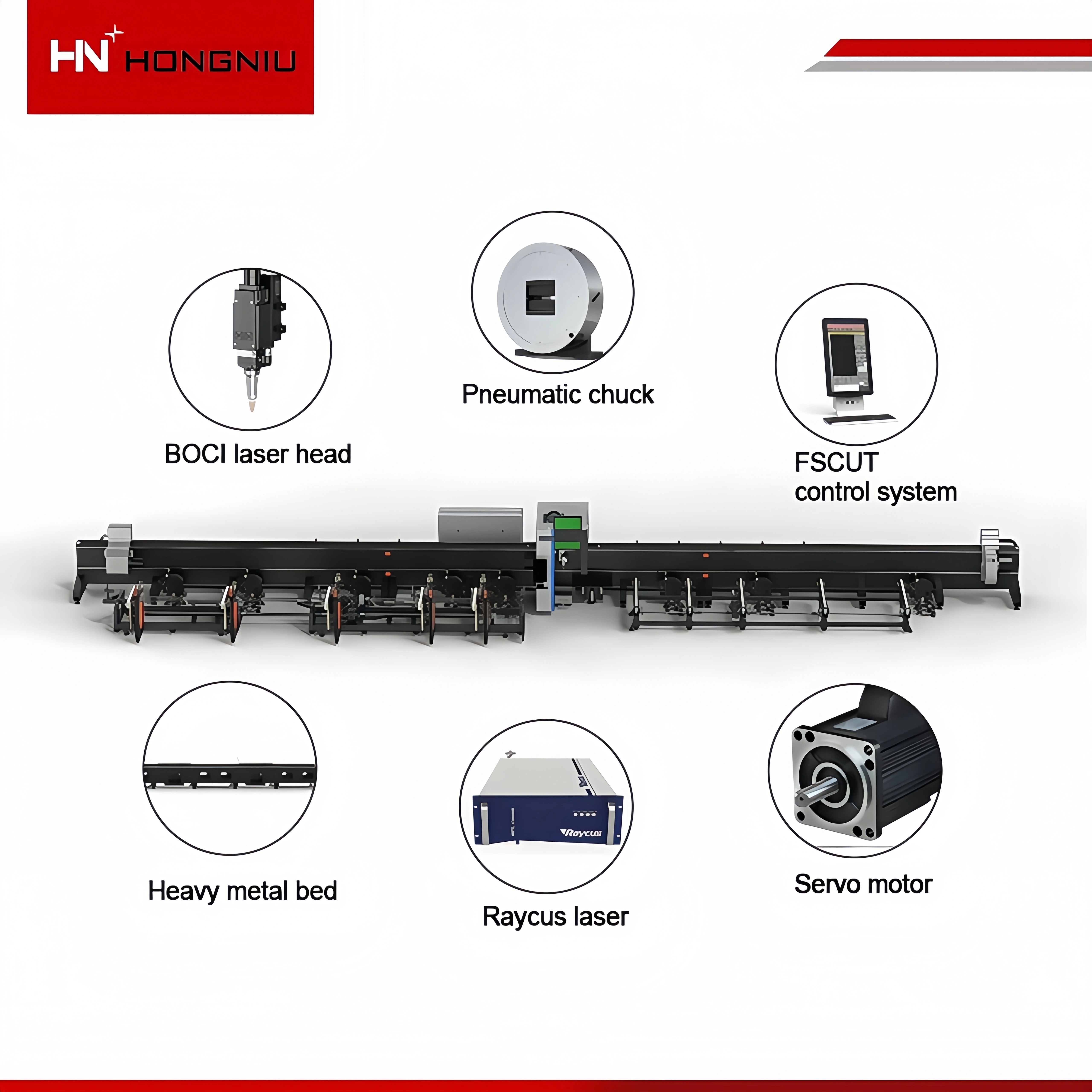
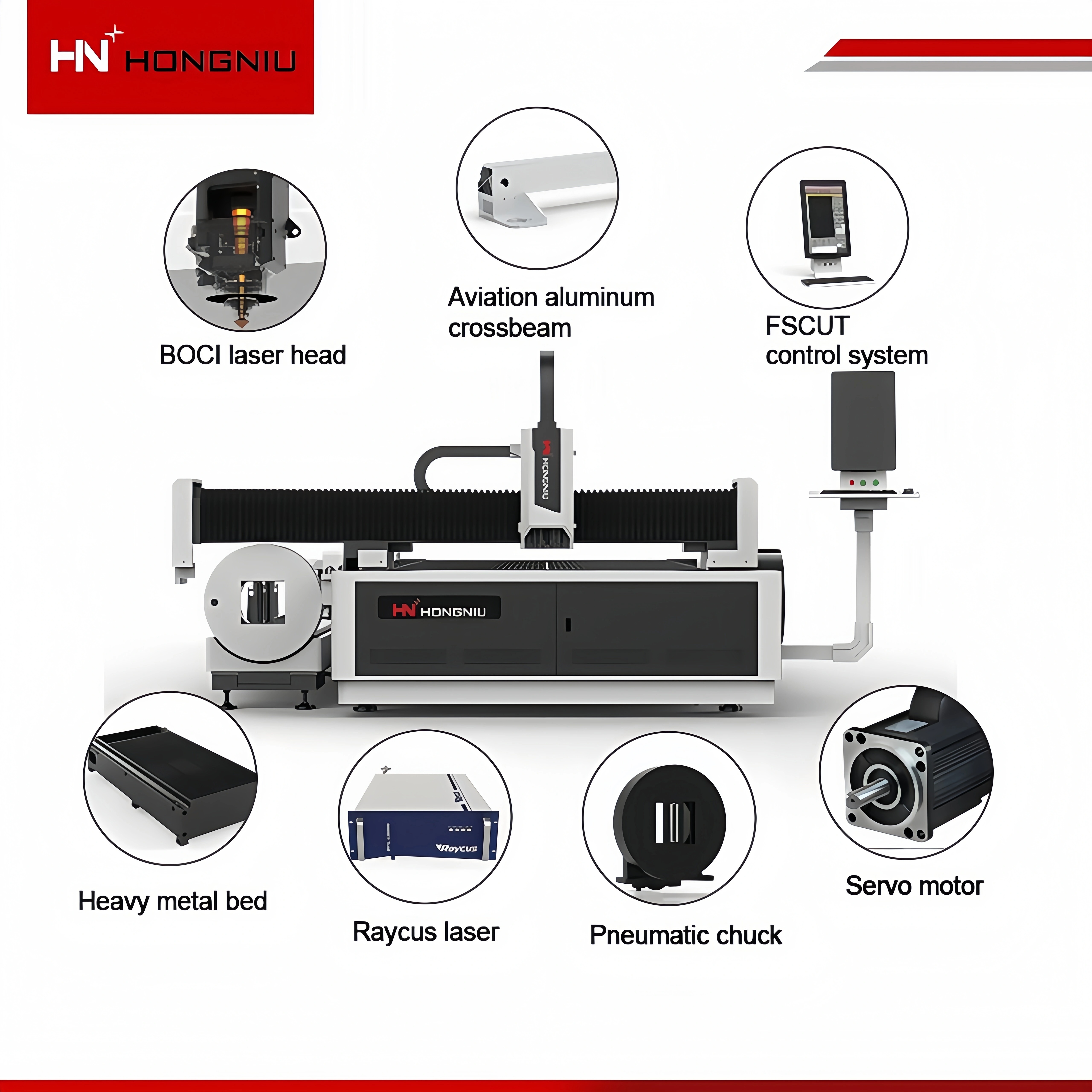
A common mistake is focusing solely on the laser source while ignoring the "bones" of the machine. The frame or bed must be heavy and stress-relieved to handle the high accelerations of the cutting head. A lightweight frame will vibrate at high speeds, leading to "chatter marks" on the cut edge and a loss of dimensional accuracy over time. High-quality motion components, such as Japanese Yaskawa or European Beckhoff motors, are indicators of a machine built for longevity.
The cutting head is another critical component. Brands like Precitec or Raytools are industry leaders for a reason—they offer superior focal stability and better protection against dust and debris. Investing in a machine with reputable third-party components ensures that you can find replacement parts and service support years down the line, protecting your investment from becoming obsolete due to a lack of proprietary parts.
Post-Sales Support and Operating Costs
The relationship with the manufacturer or distributor does not end at the time of delivery. In fact, that is when the most important phase begins. Before buying, verify the availability of local technical support and spare parts inventory. If a machine goes down, every hour of lost production is expensive. Inquire about the training programs provided; a highly skilled operator can extract 20% more efficiency from the same machine compared to a novice.
Operating costs should be calculated based on gas consumption (Oxygen or Nitrogen), electricity, and consumables like nozzles and protective windows. While fiber lasers have very low maintenance compared to CO2, they still require a clean environment and regular checks on the cooling system. Ensure that your facility has the electrical infrastructure to support the high peak-demand of a multi-kilowatt laser system to avoid unexpected electrical upgrades after the machine arrives.
Frequently Asked Questions (FAQ)
What is the difference between Fiber and CO2 laser machines?
Fiber lasers use a solid-state laser source and are significantly more efficient at cutting metals, especially reflective ones like copper. CO2 lasers use a gas mixture and are better suited for non-metallic materials like wood, plastic, and fabrics. For most modern metal fabrication, Fiber is the preferred choice due to its speed and lower maintenance.
How long does a typical industrial laser cutting machine last?
With proper maintenance, the laser source itself (the most expensive part) can last for over 100,000 hours. The mechanical frame and drive system can last decades if they are built with high-quality components and kept in a clean, stable environment.
Do I need a special license to operate a laser cutter?
While you generally do not need a government license to own the machine, you must adhere to workplace safety standards (such as OSHA or CE). This includes providing proper eye protection, ensuring the machine is correctly grounded, and having adequate ventilation systems to extract hazardous fumes.
Can I cut reflective metals like brass and copper on any fiber laser?
Most modern fiber lasers can cut reflective metals, but it is important to ensure the machine has "back-reflection" protection. This prevents the laser light from bouncing off the shiny metal and traveling back into the fiber cable, which could cause internal damage to the laser source.
Is it better to buy a higher power laser than I currently need?
Usually, yes. Buying a slightly more powerful machine provides a "buffer." It allows you to cut faster on your current materials and gives you the flexibility to take on thicker jobs in the future without having to trade in your machine for a larger model.
Table of Contents
- Defining Your Primary Material Scope and Power Requirements
- Evaluating Machine Configuration and Bed Size
- Assessing Software Compatibility and Automation Features
- Quality of Components and Long-Term Stability
- Post-Sales Support and Operating Costs
-
Frequently Asked Questions (FAQ)
- What is the difference between Fiber and CO2 laser machines?
- How long does a typical industrial laser cutting machine last?
- Do I need a special license to operate a laser cutter?
- Can I cut reflective metals like brass and copper on any fiber laser?
- Is it better to buy a higher power laser than I currently need?
