 EN
EN


The manufacturing world has long relied on mechanical methods to cut, shape, and process metal. From traditional saws and plasma torches to punch presses and waterjet systems, these technologies have served fabricators for decades. However, the rise of the metal cutting laser has fundamentally shifted how engineers and production managers evaluate their cutting operations. Choosing between a metal cutting laser and a mechanical alternative is no longer simply a matter of budget — it is a strategic decision that affects accuracy, throughput, material versatility, and long-term operational costs.
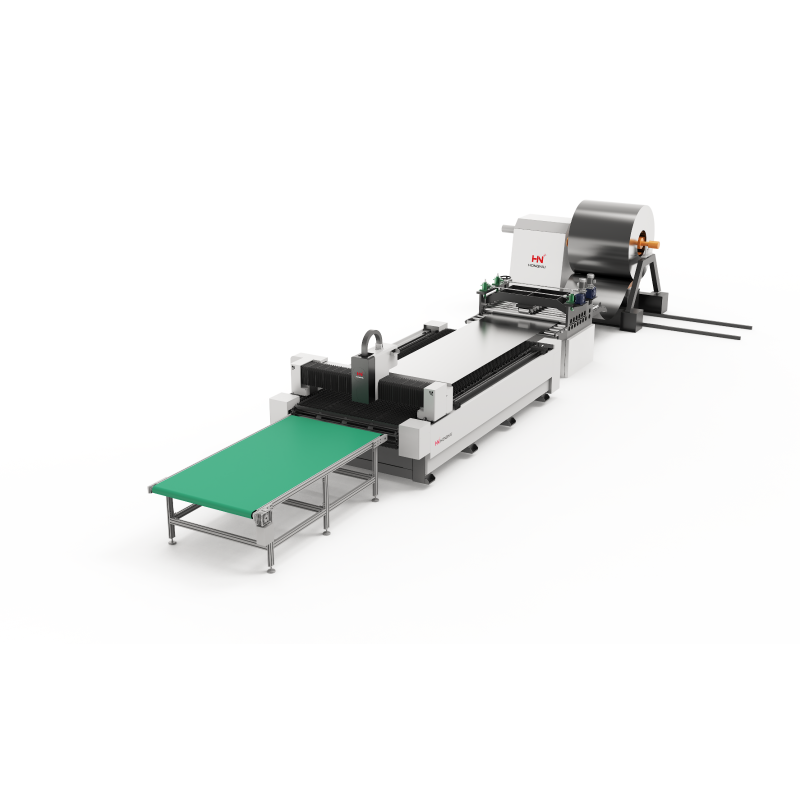
Understanding the real differences between a metal cutting laser and mechanical cutting technologies requires looking beyond surface-level comparisons. Each technology carries its own physics, its own strengths, and its own practical limitations. This article explores how a metal cutting laser compares to its mechanical counterparts across the dimensions that matter most to B2B buyers, production engineers, and facility managers who need reliable, high-quality results on the shop floor.
The Core Mechanisms Behind Each Technology
How a Metal Cutting Laser Works
A metal cutting laser generates a highly focused beam of coherent light, typically through a fiber optic medium in modern industrial systems. This beam is directed at the material surface with extreme precision, heating the metal to its melting or vaporization point in a very small localized zone. An assist gas — commonly nitrogen, oxygen, or compressed air — is used to expel the molten material and keep the cut zone clean. The result is a narrow kerf width and an extremely fine edge finish.
Because the metal cutting laser is a non-contact process, there is no physical tool touching the workpiece. This eliminates mechanical wear on cutting tools, removes clamping stress from the workpiece, and allows the system to shift between intricate geometries without retooling. Modern fiber-based metal cutting laser systems can achieve positioning speeds and cut velocities that far exceed what manual or semi-automated mechanical tools can offer.
The energy efficiency of a metal cutting laser has also improved dramatically. Contemporary fiber laser sources convert electrical energy into beam energy at efficiencies exceeding 30 percent, making them far more energy-efficient than older CO2 laser systems and competitive with many mechanical alternatives when total process energy is considered. This efficiency directly affects operating costs over the life of the machine.
How Mechanical Cutting Technologies Operate
Mechanical cutting technologies encompass a wide range of methods. Bandsaw and circular saw cutting use toothed blades driven at speed to physically remove material from the cut path. Punching and shearing processes use hardened dies and blades to shear through sheet metal by applying force. Milling and routing use rotating multi-flute tools to remove material by abrasion and chip formation. Each of these methods is contact-based, meaning the tool physically engages the workpiece.
Waterjet cutting occupies an interesting middle ground. While it uses a high-pressure stream of water mixed with abrasive particles rather than a solid tool, it is still fundamentally a mechanical erosion process. It does not involve heat, which makes it suitable for heat-sensitive materials, but it is considerably slower than a metal cutting laser for most metals and introduces issues related to abrasive consumption and water management.
The common thread across all mechanical methods is tool wear and contact force. Every pass of a blade, die, or abrasive medium removes material from both the workpiece and the cutting tool itself. This creates ongoing tooling costs, requires periodic maintenance or replacement cycles, and can introduce dimensional drift as tools degrade between replacement intervals.
Precision and Edge Quality Compared
Edge Quality from Metal Cutting Laser Processing
One of the most frequently cited advantages of the metal cutting laser is the quality of the cut edge it produces. Fiber laser systems typically deliver a smooth, oxidation-free edge when nitrogen assist gas is used, requiring little to no secondary finishing for most applications. The heat-affected zone (HAZ) in a modern metal cutting laser is narrow and well-controlled, meaning the metallurgical properties of the surrounding material are largely preserved.
Kerf width in a metal cutting laser is typically measured in fractions of a millimeter, enabling very tight nesting of parts on a sheet and minimizing material waste. Positional accuracy down to ±0.05 mm or better is routinely achievable with high-quality systems, making the metal cutting laser an excellent choice for precision components in aerospace, automotive, electronics enclosures, and medical device manufacturing.
Complex internal contours, sharp inside corners, fine detail patterns, and small-diameter holes are all feasible with a metal cutting laser in ways that are difficult or impossible to replicate with most mechanical methods. This geometric freedom is a major differentiator when design teams push for complex part geometry without driving up fabrication costs.
Edge Quality from Mechanical Cutting Methods
Mechanical cutting methods vary widely in the edge quality they produce. Saw cutting often leaves burrs and requires deburring as a secondary operation. Punching and shearing can introduce edge rollover, fracture zones, and work-hardening in the immediate vicinity of the cut, which may be problematic for structural or fatigue-critical parts. Milling produces cleaner edges but requires multiple passes and longer cycle times.
Waterjet cutting can produce acceptable edge quality but may leave a slightly roughed surface texture at slower traverse speeds. The geometry achievable with waterjet is broader than with saw or punch methods, but still limited compared to the metal cutting laser, particularly for very small features or fine detail work.
In many mechanical cutting scenarios, secondary operations such as grinding, deburring, or surface finishing are required before parts proceed to the next manufacturing stage. These steps add labor, time, and cost to the production workflow — costs that are often absent or significantly reduced when a metal cutting laser is used instead.
Speed, Throughput, and Production Flexibility
Throughput Advantages of Metal Cutting Laser Systems
The metal cutting laser excels in high-mix, mid-to-high volume production environments. Because program changes require only a software update rather than a tooling changeover, the metal cutting laser can switch between completely different part geometries in seconds. This agility makes it ideal for contract manufacturers, custom fabricators, and production shops handling frequent job changes.
Cutting speed for a metal cutting laser is measured in meters per minute and varies with material type and thickness. Thin mild steel, stainless steel, and aluminum sheets can be cut at very high speeds, enabling a single metal cutting laser system to outperform multiple mechanical alternatives in terms of parts-per-hour output. Automated loading and unloading systems integrated with metal cutting laser platforms further multiply effective throughput.
Nesting software optimization ensures that the metal cutting laser extracts the maximum number of parts from each sheet, reducing raw material consumption and contributing to leaner operation. Material savings of five to fifteen percent over less optimized mechanical processes are commonly reported in industrial settings, directly improving margins on material-intensive jobs.
Where Mechanical Methods Retain Speed Advantages
Mechanical methods are not without their own speed advantages in specific contexts. For very thick structural sections — heavy I-beams, large-diameter pipes, or thick plate requiring straight cuts — a high-power bandsaw or plasma system may complete the cut faster than a metal cutting laser at equivalent power levels. The physics of mechanical material removal in high cross-section applications can still favor contact-based tools.
Punching and stamping excel at very high volumes of identical simple shapes, particularly when tooling has already been amortized over large run quantities. In dedicated high-volume press operations, throughput rates can exceed what a metal cutting laser achieves for simple geometries because the mechanical stroke cycle time is very short. However, any variation in geometry immediately neutralizes this advantage.
It is also worth noting that mechanical processes do not require consumables such as assist gas, and some mechanical methods have lower initial capital costs for very simple operations. For very small shops or simple repetitive work, the total cost model may still favor a basic mechanical setup — though this calculus shifts quickly once part complexity or job variety increases.
Operating Costs and Total Cost of Ownership
Cost Structure of a Metal Cutting Laser Operation
The operating cost of a metal cutting laser involves several key components: electricity consumption, assist gas supply, laser source maintenance, cutting head consumables (lenses, nozzles), and periodic mechanical maintenance of the motion system. Compared to older CO2 laser technology, modern fiber-based metal cutting laser systems have significantly reduced maintenance requirements, as the fiber laser source itself has no active cooling requirements and very long service intervals.
Assist gas is one of the larger ongoing consumable costs for a metal cutting laser. Nitrogen cutting, which produces clean oxide-free edges on stainless steel and aluminum, requires relatively high gas flow rates. Oxygen-assisted cutting of mild steel reduces gas cost but produces an oxidized edge. Compressed air cutting is increasingly viable with high-brightness fiber laser sources and represents a meaningful cost reduction for many applications.
Because the metal cutting laser generates revenue-producing parts at very high speeds with minimal secondary processing, the effective cost per part is often lower than mechanical alternatives once volume and part complexity are factored in. Shops running a metal cutting laser typically recover capital investment within three to five years in moderate production environments, and faster in high-volume operations.
Cost Structure of Mechanical Cutting Operations
Mechanical cutting operations carry ongoing tooling costs that can be significant over time. Saw blades, punch tooling, router bits, and abrasive media all wear and require replacement. In high-volume production, tooling costs accumulate into a substantial operational expense that is often underestimated during initial technology evaluation. Tooling inventory management also adds an administrative burden.
Mechanical systems also require more frequent calibration and alignment as components wear. A punch press that has experienced die wear will produce parts with gradually changing dimensional characteristics until the die is replaced or regrounded. This tooling-induced dimensional drift can lead to increased scrap rates and quality issues that carry their own downstream costs.
Secondary processing costs are another factor often overlooked in mechanical cutting cost models. When deburring, grinding, or polishing are required after mechanical cutting, the labor and equipment time needed for these steps must be included in any honest total cost comparison against a metal cutting laser process that delivers near-finished edges directly from the cut.
Material Range and Application Suitability
Materials Well-Suited to Metal Cutting Laser Processing
The metal cutting laser handles an impressive range of materials with a single platform. Mild steel, stainless steel, aluminum, copper, brass, galvanized steel, and various alloy steels can all be processed on a modern fiber metal cutting laser system. Material thickness range extends from thin foils under one millimeter up to structural plate exceeding 30 mm depending on laser power level, making the metal cutting laser a highly versatile manufacturing asset.
For reflective metals such as copper and brass, the high-brightness fiber laser beam of a modern metal cutting laser handles reflectivity far more effectively than older CO2 laser systems, which were historically susceptible to back-reflection damage. This means fabricators can process decorative, electrical, and thermal management components on the same metal cutting laser platform without system modifications.
The metal cutting laser is less well-suited to non-metallic materials in most industrial configurations, and very thick plate cutting begins to approach the limits of standard laser power ranges where plasma or oxy-fuel cutting may offer a more practical solution. However, for the vast majority of sheet metal and medium-plate fabrication, the metal cutting laser covers the application range comprehensively.
Material Limitations of Mechanical Cutting Technologies
Mechanical cutting technologies each carry their own material constraints. Punching is limited to materials that can be cleanly sheared without excessive cracking — very hard materials or brittle alloys may fracture unpredictably under punch loads. Saw cutting introduces heat through friction, which can affect hardened steels or thin-walled profiles. Milling is capable but slow for large-area sheet operations.
Waterjet cutting, as noted, handles virtually any material including non-metals and heat-sensitive composites. However, for pure metallic sheet fabrication, the slower cutting speeds and abrasive management requirements of waterjet systems mean they occupy a niche role rather than a general-purpose position. The operational cost per meter of cut is also higher than a metal cutting laser for most standard metals.
In practice, many advanced fabrication facilities operate a metal cutting laser as the primary cutting platform and retain mechanical or waterjet systems for specialized tasks outside the laser's optimal range. This hybrid approach allows facilities to maximize the efficiency of the metal cutting laser while preserving the capability to handle edge cases that mechanical methods address more effectively.
FAQ
Is a metal cutting laser suitable for all sheet metal thicknesses?
A metal cutting laser is highly effective across a wide thickness range, from very thin gauge sheet metal to medium-thickness structural plate. The upper thickness limit depends on the laser source power — higher wattage systems extend the practical range. For very thick sections above 30 to 40 mm, alternative thermal or mechanical methods may be more practical, but for the majority of sheet metal and plate work encountered in typical fabrication, a metal cutting laser covers the requirement effectively.
How does the heat-affected zone in metal cutting laser processing compare to plasma cutting?
The heat-affected zone produced by a metal cutting laser is considerably narrower than that produced by plasma cutting. Fiber laser cutting delivers energy in a tightly focused spot, limiting thermal spread into the surrounding material. Plasma cutting generates a broader heat zone, which can result in more pronounced metallurgical changes in the edge region. For applications where edge integrity and tight dimensional tolerances are critical, the metal cutting laser is the preferred choice over plasma.
What assist gases are used with a metal cutting laser and how do they affect the result?
The choice of assist gas in a metal cutting laser operation directly affects edge quality, cut speed, and operating cost. Oxygen promotes an exothermic reaction that increases cutting speed for mild steel but leaves an oxide layer on the cut edge. Nitrogen produces a clean, oxide-free edge suitable for stainless steel and aluminum but requires higher flow rates. Compressed air is increasingly used with high-power metal cutting laser systems as a cost-effective option that delivers acceptable edge quality for many applications.
Can a metal cutting laser replace all mechanical cutting equipment in a fabrication facility?
For sheet metal and plate processing, a metal cutting laser can replace a large portion of the mechanical cutting equipment in a typical fabrication facility, particularly saws, punch presses, and routing systems used for profile cutting. However, it is not a direct replacement for all mechanical functions — bending, forming, threading, and heavy structural section cutting still require dedicated equipment. Many facilities transition their primary flat-sheet cutting work entirely to a metal cutting laser while retaining specialized mechanical tools for operations outside the laser's scope.
Table of Contents
- The Core Mechanisms Behind Each Technology
- Precision and Edge Quality Compared
- Speed, Throughput, and Production Flexibility
- Operating Costs and Total Cost of Ownership
- Material Range and Application Suitability
-
FAQ
- Is a metal cutting laser suitable for all sheet metal thicknesses?
- How does the heat-affected zone in metal cutting laser processing compare to plasma cutting?
- What assist gases are used with a metal cutting laser and how do they affect the result?
- Can a metal cutting laser replace all mechanical cutting equipment in a fabrication facility?
