 EN
EN

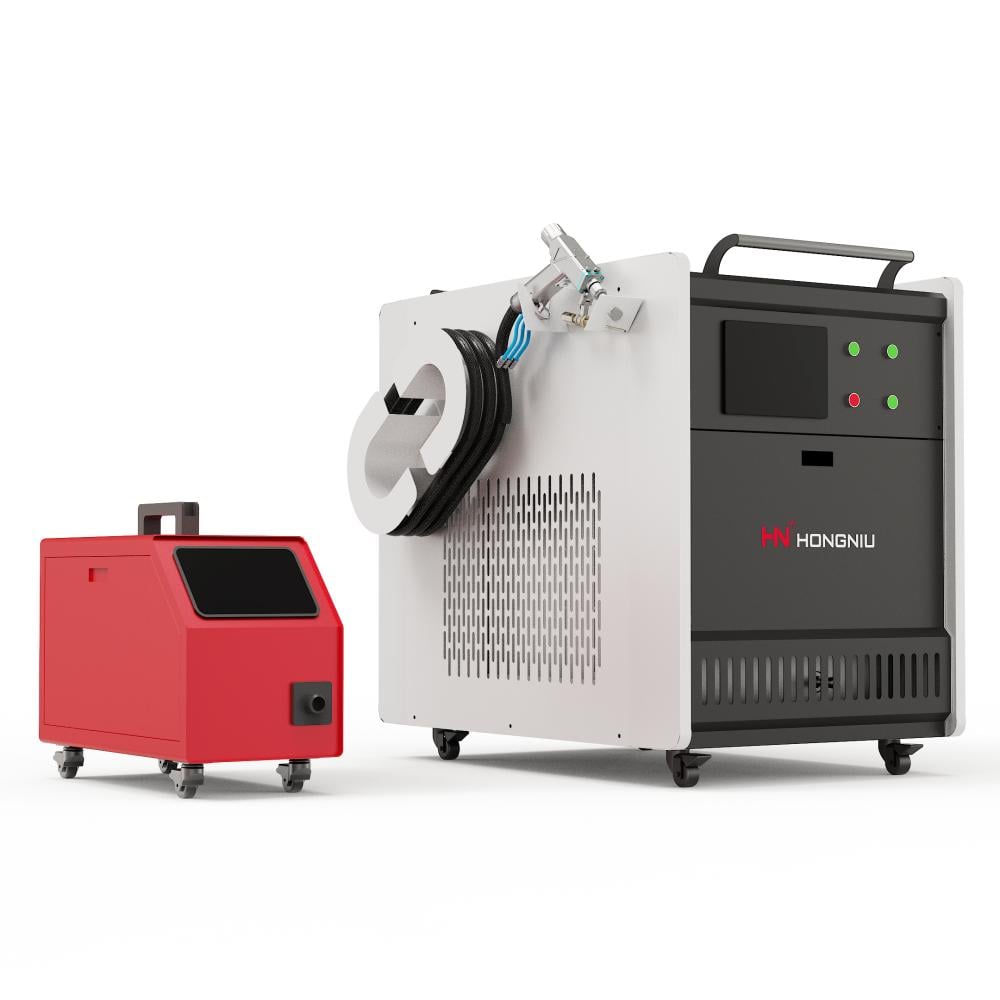
In modern manufacturing, the demand for precision has never been higher. Whether in aerospace, medical device production, automotive engineering, or electronics fabrication, the tolerance for error is essentially zero. This is exactly where the laser welder machine has established itself as the definitive solution. Unlike conventional welding methods that rely on broad heat application and physical contact, a laser welder machine delivers a concentrated, controllable beam of energy that can join materials with extraordinary accuracy and repeatability.
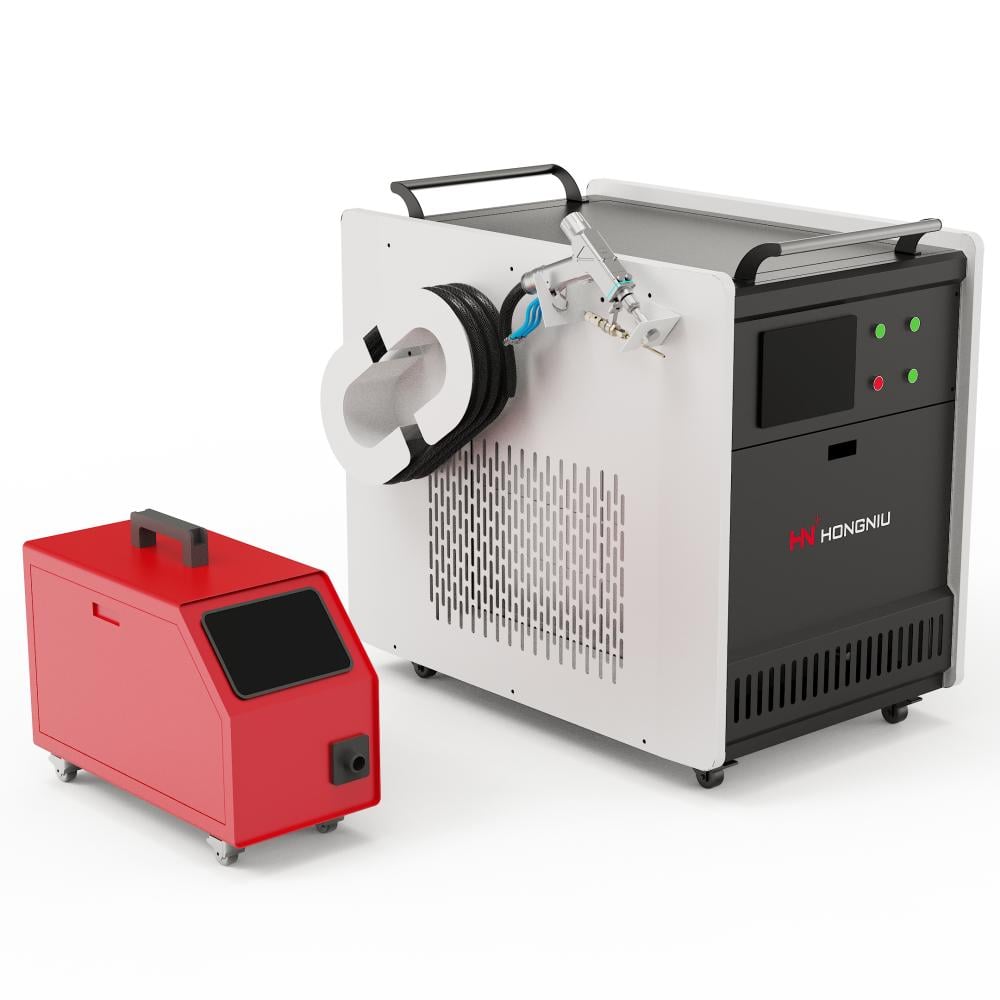
The question of why a laser welder machine is ideal for high-precision welding is not simply a matter of technology preference. It is a question rooted in physics, process control, material science, and real-world production outcomes. This article explores the core reasons why the laser welder machine has become the standard of choice for precision-critical industries, examining the underlying mechanisms, practical advantages, and application contexts that make it uniquely suited to demanding welding environments.
The Physics Behind Laser Welding Precision
Concentrated Energy Delivery
The fundamental reason a laser welder machine achieves superior precision lies in how it delivers energy. A laser beam can be focused to a spot diameter as small as a fraction of a millimeter, concentrating enormous energy density into an extremely localized area. This means the heat-affected zone — the region of base material altered by welding heat — is dramatically smaller than what any arc-based or flame-based process can achieve.
When the heat-affected zone is minimized, the surrounding material retains its original mechanical properties, dimensional stability, and surface finish. For components where tolerances are measured in microns, this is not a minor advantage — it is the entire basis of process viability. A laser welder machine does not just weld more neatly; it fundamentally changes the thermal profile of the weld event in a way that protects the integrity of the workpiece.
This concentrated energy delivery also enables the laser welder machine to work on extremely thin materials, delicate assemblies, and components that would be destroyed or distorted by conventional welding heat. The ability to weld without compromising adjacent features is a direct consequence of this physics-level advantage.
Non-Contact Process and Mechanical Stability
A laser welder machine operates without any physical contact between the welding tool and the workpiece. There is no electrode wear, no torch pressure, and no mechanical force applied to the part during the weld cycle. This non-contact nature eliminates a significant source of dimensional error that plagues contact-based welding methods.
In precision assemblies, even slight mechanical pressure during welding can shift component alignment, introduce micro-stresses, or cause surface marking. The laser welder machine avoids all of these issues entirely. The beam travels through air or a controlled atmosphere and interacts only with the material surface at the focal point, leaving everything else undisturbed.
This characteristic makes the laser welder machine particularly valuable in automated production lines where repeatability is paramount. Each weld cycle is geometrically identical to the last, because there is no tool wear or contact variability to introduce drift over time.
Process Control Capabilities That Enable Precision
Programmable Parameters and Weld Geometry
One of the most compelling reasons the laser welder machine is ideal for high-precision welding is the depth of process control it offers. Laser power, pulse duration, pulse frequency, beam travel speed, focal position, and spot size can all be programmed and adjusted with fine granularity. This means the weld profile — its depth, width, and shape — can be engineered to match the exact requirements of each application.
For a given joint design, an operator or process engineer can dial in the exact parameters needed to achieve full penetration without burn-through, or a precise surface weld without affecting the substrate below. This level of control is simply not available with manual or semi-automatic conventional welding processes, where human variability and equipment limitations introduce inconsistency.
The laser welder machine also supports complex weld geometries. Circular welds, contoured seams, and multi-axis paths can be executed with CNC or robotic integration, allowing the beam to follow intricate part geometries with consistent energy delivery throughout the entire weld path. This is critical for components with curved surfaces, internal features, or asymmetric joint designs.
Real-Time Monitoring and Feedback Integration
Modern laser welder machine systems are increasingly equipped with real-time monitoring capabilities. Sensors can track weld pool behavior, thermal emission, and beam positioning during the weld event, feeding data back to the control system for immediate adjustment. This closed-loop capability means that process deviations are corrected before they result in defective welds.
In high-precision manufacturing, the cost of a defective weld is not just the material loss — it is the downstream inspection, rework, and potential scrapping of an entire assembly. A laser welder machine with integrated monitoring reduces this risk substantially by catching anomalies in real time rather than during post-process inspection.
This integration with digital process control also supports traceability requirements in regulated industries. Every weld event can be logged with its full parameter set, providing documentation that is increasingly required in medical device, aerospace, and defense manufacturing environments.
Material Compatibility and Versatility in Precision Applications
Welding Difficult and Dissimilar Materials
Precision manufacturing frequently involves materials that are challenging to weld by conventional means. Stainless steel, titanium, nickel alloys, copper, and thin-gauge aluminum all present specific challenges related to thermal conductivity, oxidation sensitivity, or reflectivity. The laser welder machine addresses these challenges through its ability to precisely control energy input and, in fiber laser configurations, to deliver wavelengths that are well-absorbed by a wide range of metals.
Dissimilar metal welding — joining two different alloys in a single weld — is another area where the laser welder machine demonstrates clear advantages. The narrow, controlled heat input minimizes the formation of brittle intermetallic phases that typically form when dissimilar metals are joined with excessive heat. This makes the laser welder machine suitable for applications such as battery tab welding, sensor assembly, and multi-material structural joints.
The ability to weld reflective materials like copper and gold, which are common in electronics and precision instrumentation, further extends the range of applications where a laser welder machine is not just preferred but often the only viable option.
Micro-Welding and Fine Feature Joining
At the extreme end of precision requirements, the laser welder machine enables micro-welding — joining features measured in tenths of a millimeter with weld beads that are barely visible to the naked eye. This capability is essential in medical implant manufacturing, microelectronics packaging, watchmaking, and precision instrument assembly.
Micro-welding with a laser welder machine requires not only a tightly focused beam but also a stable, vibration-isolated work environment and precise fixturing. When these conditions are met, the laser welder machine can produce welds that are structurally sound, aesthetically clean, and dimensionally accurate to a degree that no other welding technology can match at this scale.
The repeatability of micro-welding with a laser welder machine also supports high-volume production of miniaturized components, where manual welding would be impractical and inconsistent. Automated laser welder machine systems can produce thousands of identical micro-welds per shift with statistical process control confirming quality at every stage.
Productivity and Quality Outcomes in Precision Manufacturing
Reduced Post-Weld Processing Requirements
A significant practical advantage of the laser welder machine in precision applications is the reduction in post-weld processing. Because the heat-affected zone is small and the weld bead is narrow and consistent, there is typically far less spatter, oxidation, and surface distortion compared to conventional welding. This means less grinding, polishing, and rework after welding.
In precision manufacturing, post-weld processing is not just a cost issue — it is a quality risk. Every additional handling step introduces the possibility of dimensional change, surface damage, or contamination. By producing cleaner welds from the start, the laser welder machine reduces the number of process steps between welding and final inspection, shortening the production cycle and reducing the risk of introducing defects.
For components with tight dimensional tolerances, the minimal distortion produced by a laser welder machine often means that post-weld straightening or re-machining is unnecessary. This is a direct productivity gain that compounds across high-volume production runs.
Consistency Across Production Volumes
Precision is not just about achieving a good result once — it is about achieving the same result thousands of times. The laser welder machine excels in this regard because its process parameters are digitally controlled and fully repeatable. Once a weld program is validated, it can be executed identically across an entire production run without the variability introduced by operator skill, fatigue, or equipment wear.
This consistency is particularly valuable in industries where every component must meet the same specification, and where statistical sampling is used to validate batch quality. A laser welder machine that produces consistent welds reduces the variance in the quality distribution, making it easier to maintain process capability indices that satisfy customer and regulatory requirements.
The combination of precision, repeatability, and process control makes the laser welder machine not just a welding tool but a quality assurance asset. Its contribution to manufacturing quality extends beyond the weld itself to the overall reliability and predictability of the production process.
FAQ
What types of materials can a laser welder machine handle in precision applications?
A laser welder machine is compatible with a wide range of metals including stainless steel, titanium, aluminum, copper, nickel alloys, and precious metals. It is also capable of joining dissimilar metals, which is a common requirement in electronics, medical devices, and precision instrumentation. The key advantage is that the controlled heat input minimizes material degradation and maintains the mechanical properties of the base material.
How does a laser welder machine compare to TIG welding for precision work?
While TIG welding is considered a high-quality process, a laser welder machine offers a significantly smaller heat-affected zone, faster weld speeds, and far greater repeatability in automated environments. TIG welding depends heavily on operator skill and is difficult to automate for complex geometries. A laser welder machine, by contrast, can be fully programmed and integrated with CNC or robotic systems, making it more suitable for high-volume precision production.
Is a laser welder machine suitable for thin-gauge materials?
Yes, the laser welder machine is one of the most effective tools for welding thin-gauge materials. Its ability to deliver precise, low-heat-input welds without burn-through makes it ideal for sheet metal components, foil assemblies, and thin-walled tubing. The non-contact process also eliminates the risk of mechanical deformation that can occur with contact-based welding on delicate thin materials.
What industries benefit most from using a laser welder machine for high-precision welding?
The industries that benefit most include medical device manufacturing, aerospace and defense, automotive electronics, precision instrumentation, jewelry and watchmaking, and semiconductor packaging. In each of these sectors, the laser welder machine addresses the core challenge of joining materials with minimal thermal impact, high dimensional accuracy, and consistent quality across large production volumes.
Table of Contents
- The Physics Behind Laser Welding Precision
- Process Control Capabilities That Enable Precision
- Material Compatibility and Versatility in Precision Applications
- Productivity and Quality Outcomes in Precision Manufacturing
-
FAQ
- What types of materials can a laser welder machine handle in precision applications?
- How does a laser welder machine compare to TIG welding for precision work?
- Is a laser welder machine suitable for thin-gauge materials?
- What industries benefit most from using a laser welder machine for high-precision welding?
