 EN
EN

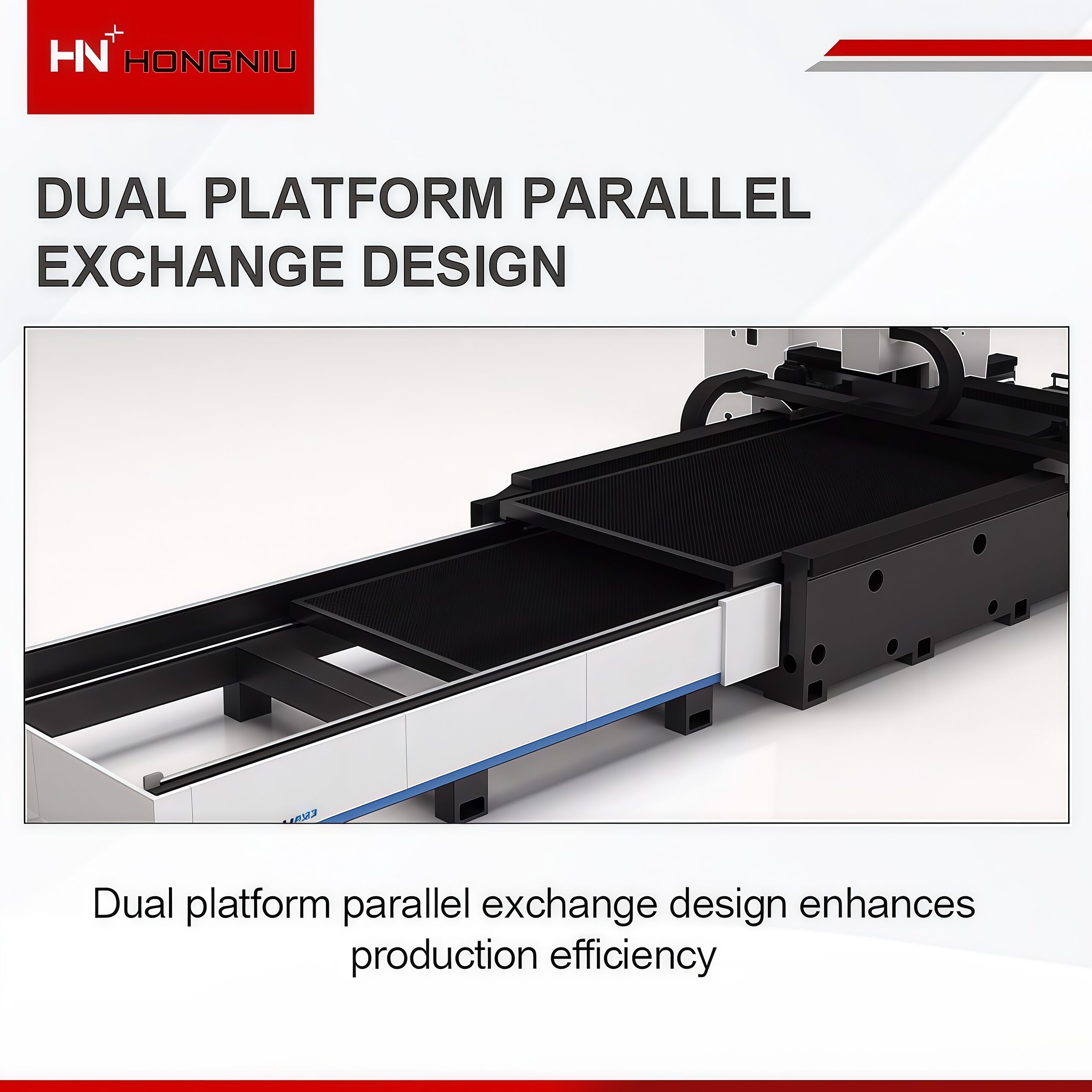
In the industrial fabrication landscape, the choice between thermal precision and mechanical force determines the efficiency, cost, and quality of the final product. For decades, mechanical cutting—utilizing physical tools like shears, punches, and saws—was the standard for metalwork. However, the rise of the laser cut machine has introduced a paradigm shift, offering a non-contact, high-velocity alternative that has redefined what is possible in precision engineering.
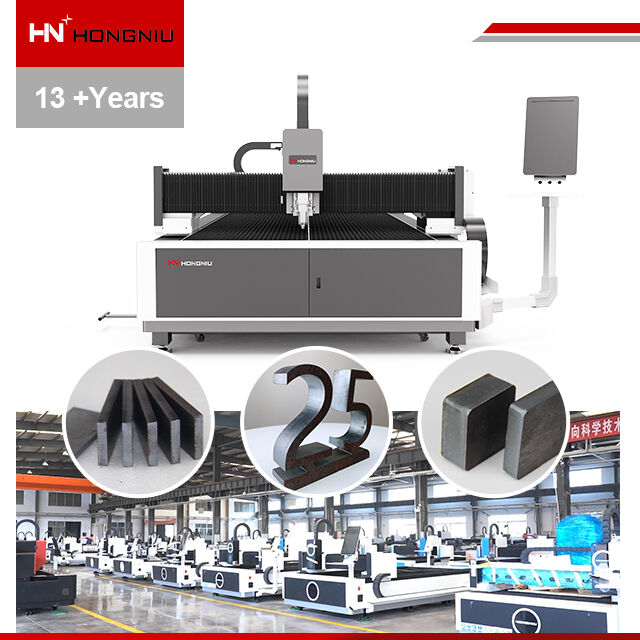
For B2B manufacturers, understanding the core differences between these two methodologies is essential for optimizing production lines. Whether you are fabricating heavy-duty frames for industrial wire bending machines or intricate hardware for automotive interiors, the technology you choose impacts everything from material yield to labor overhead. This guide explores the technical and operational distinctions that make the laser cut machine a superior choice for modern industrial applications.
Precision and Geometric Flexibility
The most striking difference between the two methods lies in the level of detail they can achieve. Mechanical cutting relies on the physical dimensions of a tool, such as a drill bit or a punching die. This inherently limits the complexity of the shapes that can be produced. A laser cut machine, however, utilizes a concentrated beam of light with a microscopic focal point. This allows for the execution of intricate geometries, sharp internal corners, and complex nesting patterns that would be impossible to replicate with mechanical tools.
Because a laser is controlled by advanced CNC software, it can transition between different designs instantaneously without the need for custom tooling. In mechanical fabrication, creating a new part often requires a new set of dies or jigs, which adds significant time and cost to the prototyping phase. The laser eliminates these barriers, allowing manufacturers of specialized equipment, such as industrial metal detectors or bottle cap molds, to move from digital concepts to finished metal parts with absolute fidelity and zero tool-related constraints.
Non-Contact Processing vs. Physical Force
Mechanical cutting is an invasive process. It requires the application of immense physical pressure to shear or punch through metal. This force often leads to material deformation, such as bowing or warping, especially in thinner gauges. To counteract this, mechanical methods require heavy-duty clamping systems that can mar the surface of the metal. Because a laser cut machine is a non-contact tool, there is no physical friction or pressure exerted on the workpiece. The laser melts and vaporizes the metal locally, leaving the surrounding material completely unaffected by mechanical stress.
This lack of contact also means there is no "tool wear." In mechanical systems, blades dull and bits break, leading to a gradual decline in cut quality that requires constant monitoring and maintenance. The laser beam remains consistent throughout its service life, ensuring that the 10,000th part has the exact same dimensions and edge quality as the first. This consistency is critical for high-volume B2B production, such as the manufacturing of ball-joint housings or structural plates for welding systems, where part uniformity is a prerequisite for successful downstream assembly.
Technical Comparison: Laser vs. Mechanical Cutting
The following table summarizes the key performance metrics that distinguish modern laser systems from traditional mechanical fabrication tools.
| Feature | Laser Cut Machine | Mechanical Cutting (Punch/Saw) |
| Contact Method | Non-contact (Thermal) | Physical contact (Mechanical force) |
| Repeatability | High (±0.03mm) | Moderate (±0.5mm) |
| Tool Wear | None (Static laser source) | High (Requires sharpening/replacement) |
| Material Stress | Low (Minimal HAZ) | High (Risk of warping/burring) |
| Complex Shapes | Unlimited (Software-driven) | Limited (Limited by tool shape) |
| Setup Time | Instant (Digital loading) | Long (Manual tool setup/clamping) |
| Material Waste | Minimal (Tight nesting) | Higher (Large spacing required) |
Edge Quality and Secondary Processing
One of the hidden costs of mechanical cutting is the "secondary labor" required after the cut is finished. Saws and punches often leave behind rough, jagged edges known as burrs. In many industrial applications, these burrs must be manually removed through grinding or sanding before the part can be painted or welded. This adds significant time and labor expense to the production cycle. A high-quality fiber laser produces a "production-ready" edge that is smooth, perpendicular, and burr-free.
When cutting stainless steel or aluminum, the laser uses nitrogen as an assist gas to prevent oxidation. This ensures that the edges remain bright and retain their original chemical properties, which is essential for medical hardware or food-processing equipment. By producing a finished edge in a single pass, the laser streamlines the entire fabrication workflow. Manufacturers can reallocate their workforce from the grinding department to higher-value assembly tasks, directly improving the factory's total throughput and profit margins.
Material Efficiency and Operational Sustainability
In any B2B fabrication environment, material cost is a dominant variable. Mechanical cutting requires significant "borders" around each part to allow for clamping and to maintain sheet stability during the punch. This results in a high percentage of scrap metal. The precision of the laser, combined with its narrow kerf width, allows for parts to be nested with only a few millimeters of separation. Some advanced software even allows for "common-line cutting," where one laser pass serves as the boundary for two parts, further reducing material usage.
Operational sustainability also favors the laser. Modern fiber laser systems are significantly more energy-efficient than the hydraulic systems required for large-scale mechanical presses. Furthermore, the laser eliminates the need for lubricating oils and coolants often required during mechanical sawing and drilling, which can be difficult to dispose of and can contaminate the workpiece. For a facility looking to modernize its operations, the laser provides a cleaner, faster, and more cost-effective solution that aligns with modern environmental standards.
Application in High-States Industrial Assembly
The superiority of the laser is most evident in the production of complex industrial machinery. For example, in the fabrication of automated sports ball production lines or gym equipment frames, structural steel must be cut with precise interlocking slots and bolt holes. Mechanical drilling often results in slight "drift," causing misalignment during assembly. The laser ensures that every hole is perfectly circular and positioned with sub-millimeter accuracy, allowing for seamless assembly and superior structural integrity.
This reliability extends to specialized hardware manufacturing. Whether producing components for automotive exhaust systems or high-precision fasteners, the ability to maintain tight tolerances across a variety of metals—including reflective brass and copper—makes the laser an indispensable tool. As industrial designs become more complex, the limitations of mechanical cutting become more apparent. The laser provides the technological freedom to innovate, allowing engineers to design parts based on performance requirements rather than the limitations of the machine shop.
Frequently Asked Questions (FAQ)
Does a laser cut machine cost more to maintain than mechanical tools?
Actually, it usually costs less. While the initial investment is higher, the lack of moving mirrors (in fiber lasers) and the absence of physical tool wear mean that maintenance is limited to inexpensive consumables like nozzles and protective windows. Mechanical systems require constant lubrication and frequent replacement of expensive blades or dies.
Can a laser cut thick metal as effectively as a mechanical saw?
Yes, modern high-power lasers (12kW and above) can cut through thick plates (up to 50mm) with much greater speed and accuracy than a mechanical saw. While a saw might be used for extremely thick sections, the laser provides a finished edge that a saw cannot match, eliminating the need for secondary milling.
Why is laser cutting better for reflective metals like copper?
Mechanical tools can struggle with copper because it is soft and tends to "gum up" blades. While older CO2 lasers struggled with reflection, modern fiber lasers have a wavelength that copper absorbs efficiently, allowing for clean, high-speed cuts that are far more precise than mechanical punching.
Is laser cutting faster than mechanical punching for high volumes?
For simple shapes, a mechanical punch can be very fast. However, as soon as the design includes curves, internal holes, or different sizes, the laser becomes faster because it does not have to stop and change tools. When you factor in the reduced setup time and lack of secondary finishing, the laser is almost always more efficient.
How does the "kerf" width affect my material costs?
The "kerf" is the width of the material removed by the cutting tool. A mechanical saw might have a kerf of 3mm to 5mm, while a laser's kerf is usually less than 0.3mm. This allows you to fit more parts onto a single sheet of metal, which can save thousands of dollars in raw material costs over a year of production.
