 EN
EN

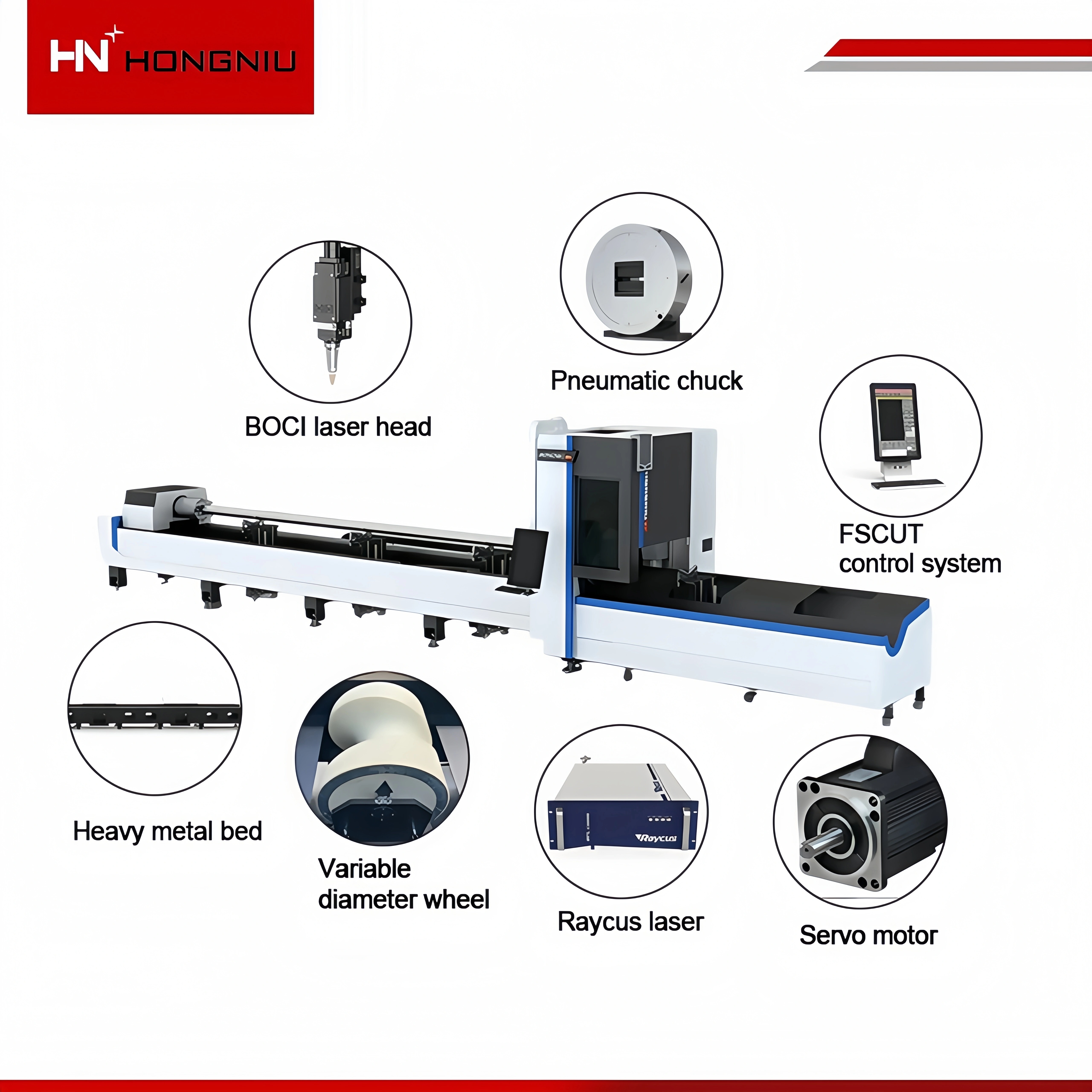
The pursuit of perfection in metal fabrication has led to the development of various thermal and mechanical cutting technologies. However, none have reached the pinnacle of precision quite like the modern Laser Cutting Machine. In an era where "close enough" is no longer acceptable for industrial standards, the ability to achieve micron-level accuracy is what separates market leaders from their competitors.
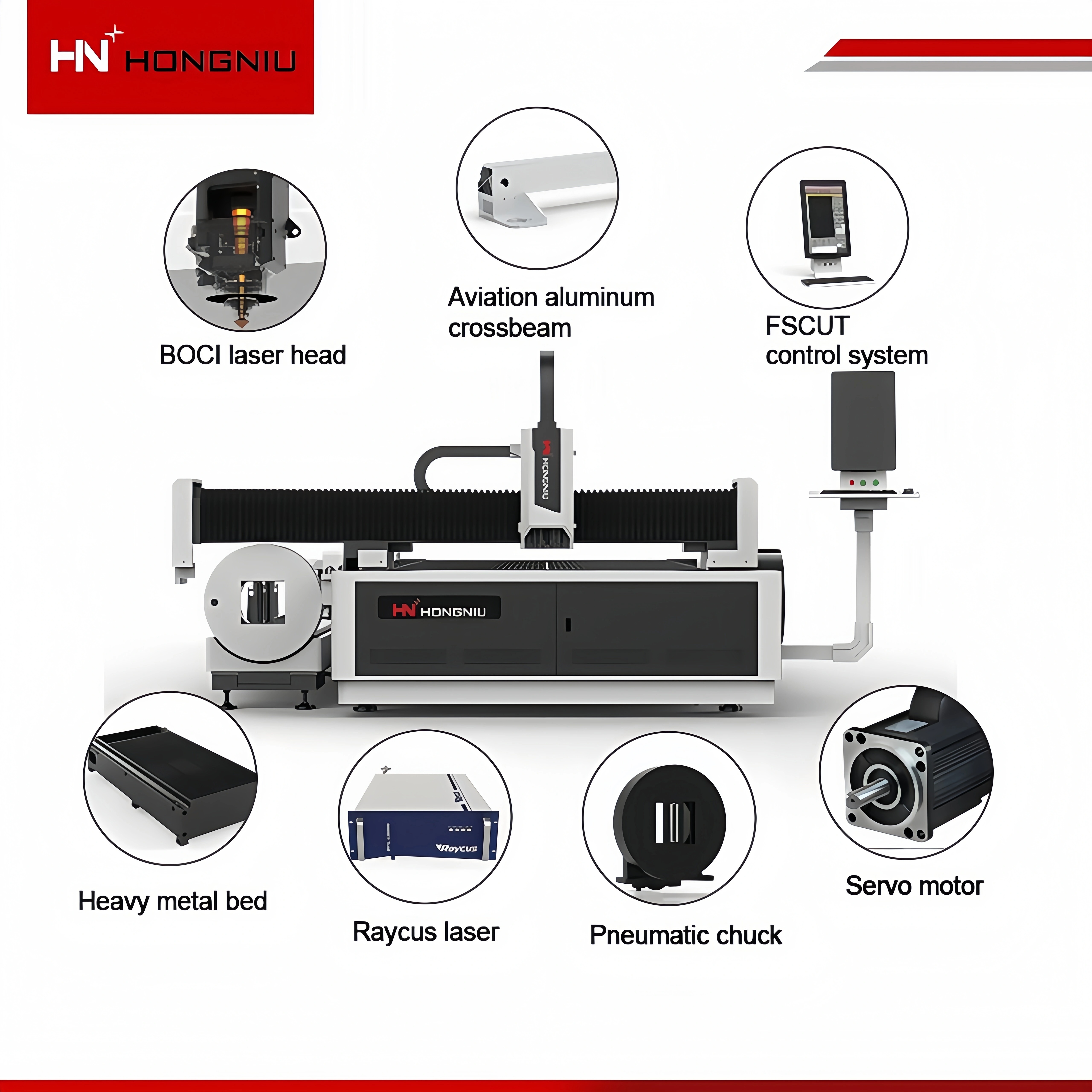
This improvement in accuracy is not the result of a single feature but rather a synergy of advanced optics, high-speed computation, and robust mechanical engineering. By replacing physical blades with a concentrated beam of light, manufacturers can eliminate the variables that typically lead to errors, such as tool wear and material shifting. This article explores the technical mechanisms that allow a Laser Cutting Machine to redefine the boundaries of precision in modern manufacturing.
The Role of Concentrated Light and Spot Diameter
At the heart of the precision offered by a Laser Cutting Machine is the physics of the laser beam itself. Unlike a mechanical saw that has a physical thickness or a plasma torch that produces a wide, flared arc, a laser can be focused into a incredibly small spot diameter—often less than 0.1mm. This narrow "kerf" allows for the creation of intricate geometries and sharp internal corners that are physically impossible to achieve with traditional tools.
Because the beam is highly collimated, it maintains its intensity over a specific focal length. This ensures that the top and bottom of the cut remain perfectly vertical, eliminating the "taper" effect common in waterjet or plasma cutting. For components that require press-fit assembly or interlocking gears, this vertical consistency is the difference between a functional part and scrap metal.
Mechanical Stability and CNC Integration
The accuracy of a Laser Cutting Machine is equally dependent on its "skeleton"—the gantry and motion system. High-end machines are constructed using heavy, stress-relieved frames that dampen the vibrations caused by high-speed movements. When the cutting head moves at speeds exceeding 100 meters per minute, any slight tremor in the frame would manifest as a wavy edge or "chatter" on the metal surface.
To translate digital designs into physical reality, these machines utilize sophisticated CNC (Computer Numerical Control) systems. These controllers process thousands of lines of code per second, coordinating the motion of the X, Y, and Z axes with micro-millimeter precision. Advanced systems even include "look-ahead" features that predict upcoming curves and adjust the acceleration and deceleration of the cutting head in real-time. This prevents the "overshooting" of corners, ensuring that every geometric shape is rendered exactly as intended in the CAD file.
Performance Comparison: Accuracy and Tolerance by Method
| Cutting Technology | Dimensional Accuracy | Minimum Kerf Width | Repeatability |
| Laser Cutting Machine | ±0.05 mm - ±0.1 mm | 0.1 mm - 0.3 mm | ±0.02 mm |
| Waterjet Cutting | ±0.1 mm - ±0.2 mm | 0.5 mm - 1.0 mm | ±0.05 mm |
| Plasma Cutting | ±0.5 mm - ±1.0 mm | 1.5 mm - 3.0 mm | ±0.2 mm |
| CNC Punching | ±0.1 mm - ±0.2 mm | Fixed Tool Size | ±0.1 mm |
Minimizing Thermal Deformation Through Speed
A common challenge in metal processing is "thermal distortion." When metal is heated, it expands; if a cutting process is too slow, the surrounding material absorbs too much heat, causing the part to warp or grow slightly out of tolerance. The high power density of a Laser Cutting Machine solves this by concentrating energy so intensely that the material is vaporized almost instantly.
By moving at high velocities, the laser minimizes the "Heat Affected Zone" (HAZ). The material is cut and cooled by the assist gas (Nitrogen or Oxygen) before the heat has a chance to migrate into the rest of the sheet. This thermal control is critical for thin materials and high-precision electronics housings where even a 0.2mm deviation due to heat expansion would result in a failure during the assembly phase.
Automated Height Sensing and Surface Adaptation
Metal sheets are rarely perfectly flat; they often have slight bows or irregularities. In traditional machining, these variations can lead to inconsistent cut depths or even tool collisions. A modern Laser Cutting Machine is equipped with a capacitive height sensor within the cutting head. This sensor maintains a constant distance between the nozzle and the material surface, regardless of any warping.
As the head travels across the sheet, the Z-axis adjusts dynamically, moving up and down hundreds of times per second to follow the material's topography. This ensures that the focal point of the laser remains at the optimal position—either on the surface or slightly inside the material—throughout the entire cutting path. This automated adaptation is a key factor in achieving consistent accuracy across large-format sheets.
Intelligent Nesting and Material Utilization
Precision is not only measured by the accuracy of a single part but also by the accuracy of the layout across the entire raw material. Modern laser software uses intelligent nesting to place parts as close together as possible, sometimes sharing a single cut line (common line cutting). Because the laser kerf is so predictable and narrow, parts can be placed mere millimeters apart without compromising structural integrity.
This software-driven precision reduces human error in material planning. It accounts for the grain of the metal and the thermal load of the entire sheet, sequencing the cuts in a way that prevents heat buildup in one specific area. By optimizing the sequence and the layout, the machine ensures that the last part cut on the sheet is just as accurate as the first, regardless of the cumulative thermal stress.
Frequently Asked Questions (FAQ)
Does the thickness of the metal affect the cutting accuracy?
Yes, as the material thickness increases, the tolerance typically widens slightly. While a laser can maintain ±0.05mm on thin sheets (1-3mm), it might shift to ±0.1mm or ±0.2mm on very thick plates (over 20mm). However, even at these thicknesses, it remains significantly more accurate than plasma or oxy-fuel cutting.
How often does a Laser Cutting Machine need to be calibrated?
For high-precision industrial work, the machine's "perpendicularity" and focal point should be checked weekly. Most modern machines have automated calibration routines that allow the operator to verify accuracy in a few minutes, ensuring the system remains within its specified tolerances.
Can laser cutting achieve the same accuracy as CNC milling?
For 2D profiles and sheet metal, laser cutting is often preferred because it is faster and does not require complex clamping. While CNC milling can achieve tighter tolerances (down to ±0.01mm) for 3D parts, the Laser Cutting Machine is the gold standard for speed and precision in flat metal fabrication.
Why is Nitrogen used for high-precision cuts in stainless steel?
Nitrogen is an inert gas that prevents the metal from burning or oxidizing during the cut. This results in a "clean" edge that is free of dross and discoloration. Because there is no oxide layer to remove, the dimensions of the part remain exactly as they were cut, which is vital for precision assembly.
How does the beam quality affect the final accuracy?
Beam quality, often referred to as M^2, determines how well the laser can be focused. A lower M^2 value means a tighter, cleaner focus. If the beam quality is poor, the spot will be larger and less intense, leading to a wider kerf and decreased dimensional accuracy. High-quality fiber laser sources are engineered to provide the best possible beam quality for maximum precision.
Table of Contents
- The Role of Concentrated Light and Spot Diameter
- Mechanical Stability and CNC Integration
- Minimizing Thermal Deformation Through Speed
- Automated Height Sensing and Surface Adaptation
- Intelligent Nesting and Material Utilization
-
Frequently Asked Questions (FAQ)
- Does the thickness of the metal affect the cutting accuracy?
- How often does a Laser Cutting Machine need to be calibrated?
- Can laser cutting achieve the same accuracy as CNC milling?
- Why is Nitrogen used for high-precision cuts in stainless steel?
- How does the beam quality affect the final accuracy?
