 EN
EN

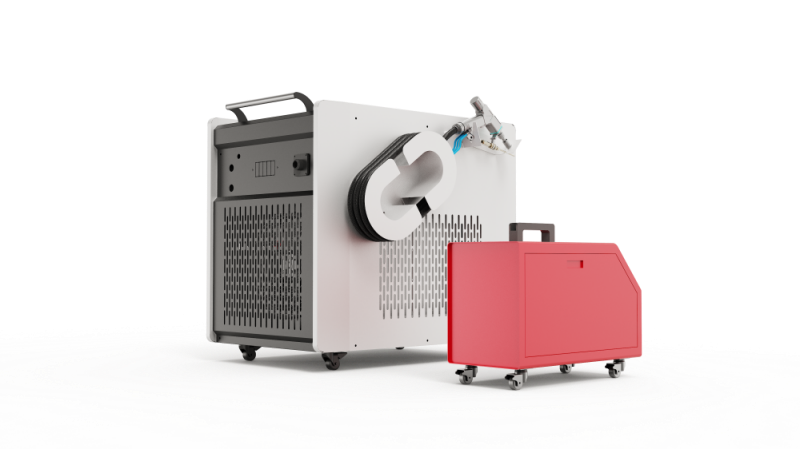
In modern manufacturing, welding consistency is not just a quality goal — it is a production requirement. Inconsistent welds lead to rework, scrap, structural failures, and costly downtime. The laser welding machine has become one of the most effective tools for solving this problem, delivering repeatable, high-precision welds across a wide range of materials and part geometries. Understanding how this technology achieves such consistent output is essential for any manufacturer looking to improve process reliability.
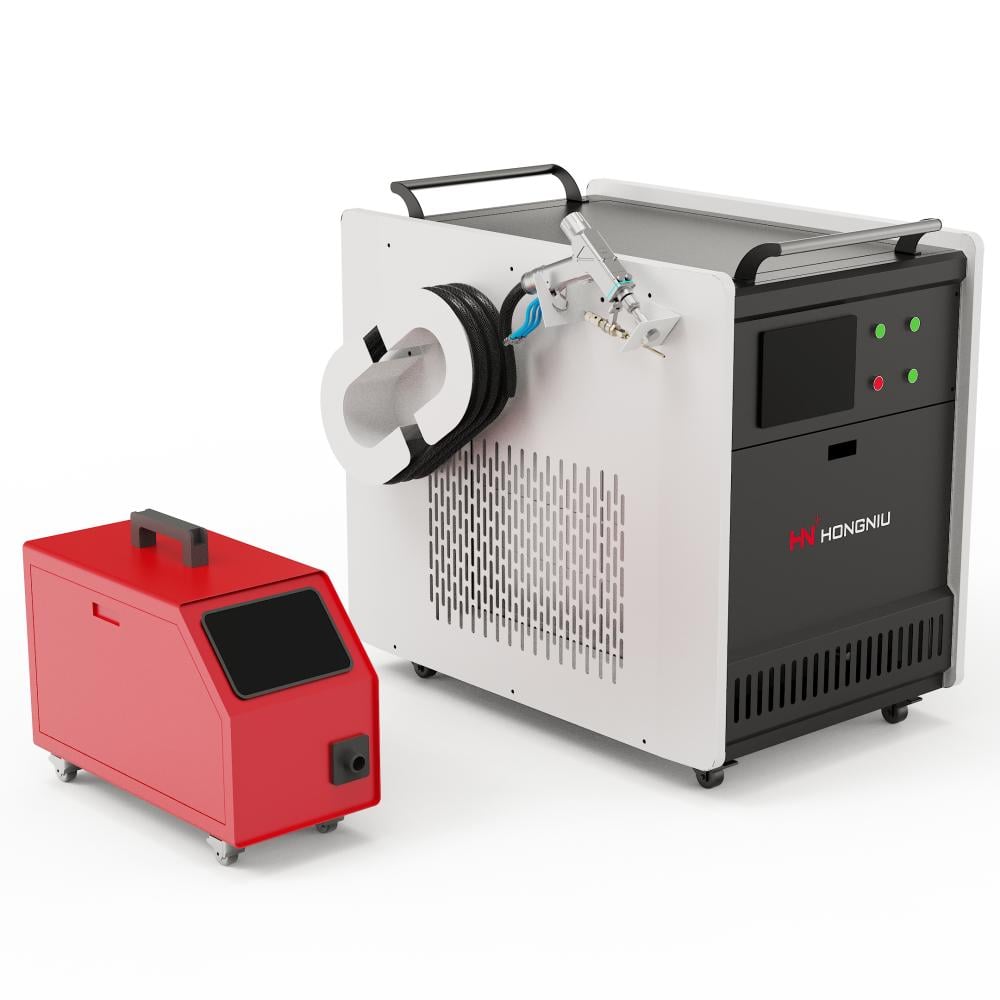
A laser welding machine uses a focused beam of laser light to fuse metal parts with extremely tight control over energy delivery. Unlike conventional arc welding, where operator skill and environmental variation heavily influence the result, a laser welding machine operates through programmable parameters that can be locked, saved, and replicated across every cycle. This fundamental characteristic makes it uniquely suited to high-volume and high-precision production environments where weld quality must remain stable shift after shift.
Precision Energy Control and Heat Management
Focused Beam Delivery Reduces Variation
One of the primary reasons a laser welding machine improves consistency is its ability to concentrate energy into an extremely small focal point. This focused delivery means the heat-affected zone is narrow and predictable. A laser welding machine does not scatter thermal energy across the surrounding material the way MIG or TIG processes often do. As a result, each weld joint receives a controlled, uniform energy input that is essentially identical from one part to the next. For industries like medical device manufacturing or precision electronics, this level of control is not optional — it is mandatory.
Programmable Parameters Lock in Repeatability
A laser welding machine allows operators to define and store welding parameters including power output, pulse duration, beam speed, and focal position. Once a parameter set is validated for a specific joint configuration, the laser welding machine can reproduce those exact conditions thousands of times without drift. This programmability eliminates the human variability that is inherent in manual welding processes. When a new batch of the same part enters production, the laser welding machine recalls the saved profile and begins producing identical welds immediately, without warm-up variation or operator adjustment.
Stability Across Materials and Joint Types
Consistent Performance on Diverse Metals
A laser welding machine maintains consistent weld quality across a broad range of metals, including stainless steel, aluminum, titanium, copper, and dissimilar metal combinations. Many of these materials are notoriously difficult to weld with conventional methods because they react unpredictably to inconsistent heat input. The laser welding machine addresses this by delivering controlled energy pulses or continuous wave output that can be precisely matched to the thermal properties of each material. The result is consistent penetration depth, bead width, and fusion quality regardless of material type.
Joint Geometry and Fit-Up Tolerance
A laser welding machine performs reliably even when joint fit-up varies within acceptable tolerances. Advanced laser welding machine models incorporate seam-tracking and real-time beam adjustment features that compensate for minor positional deviations. This adaptability ensures that even in automated production lines where part-to-part variation exists, the laser welding machine continues to produce welds that meet the required specification. The weld profile stays consistent because the system responds to the actual joint condition rather than assuming ideal geometry every time.
Integration with Automation for Process Consistency
Automated Handling Eliminates Manual Inconsistency
A laser welding machine integrates naturally with robotic arms, CNC positioning systems, and automated fixtures. When a laser welding machine is paired with an automated handling system, the welding path, speed, angle, and focal distance are all controlled mechanically rather than manually. This integration removes the most significant source of inconsistency in traditional welding — the human operator. Every laser welding machine cycle in an automated cell follows exactly the same motion path, so weld bead geometry, penetration, and surface finish remain uniform across the entire production run.
Real-Time Monitoring and Quality Feedback
Modern laser welding machine systems support inline monitoring tools that track weld pool behavior, thermal emissions, and reflected beam data in real time. When the laser welding machine detects a deviation from baseline conditions, it can trigger an alert or automatically adjust output to compensate. This closed-loop feedback capability means that the laser welding machine does not simply execute a fixed program blindly — it actively maintains the target weld condition throughout the process. For manufacturers running continuous production, this means quality is not just inspected after the fact but is controlled during the weld itself. A laser welding machine with monitoring capability reduces scrap rates significantly by catching issues before they result in failed parts. The combination of stable parameters and real-time feedback is what makes a laser welding machine the standard choice for precision welding applications that demand repeatable output.
FAQ
Why does a laser welding machine produce more consistent welds than traditional methods?
A laser welding machine uses programmable parameters and a precisely focused beam to deliver controlled, repeatable energy to each weld joint. Unlike manual welding, the laser welding machine does not depend on operator technique, which means each weld is produced under identical conditions. This makes the laser welding machine inherently more consistent than arc-based or flame-based welding processes.
What industries benefit most from using a laser welding machine for consistency?
Industries such as automotive, aerospace, medical devices, electronics, and precision tooling rely heavily on the laser welding machine for consistent output. These sectors require welds that meet exact dimensional and structural specifications every time. The laser welding machine supports these demands through tight parameter control, automation compatibility, and stable performance across high production volumes.
Can a laser welding machine maintain consistency when welding different metals?
Yes, a laser welding machine can be configured with material-specific parameter profiles that optimize energy delivery for each metal type. Whether working with stainless steel, aluminum, or dissimilar metal joints, the laser welding machine adapts its output to match the thermal requirements of the material. This flexibility allows the laser welding machine to deliver consistent weld quality even when the production line handles multiple material combinations.
