 EN
EN


A laser welding machine represents one of the most precise and efficient joining technologies in modern manufacturing, yet its actual performance depends on multiple interconnected factors that extend far beyond the equipment itself. Understanding what influences laser welding machine efficiency helps manufacturers optimize their operations, reduce defects, and achieve consistent weld quality across diverse applications. The performance of a laser welding machine is shaped by equipment specifications, material characteristics, environmental conditions, and operator expertise working together in a complex system.
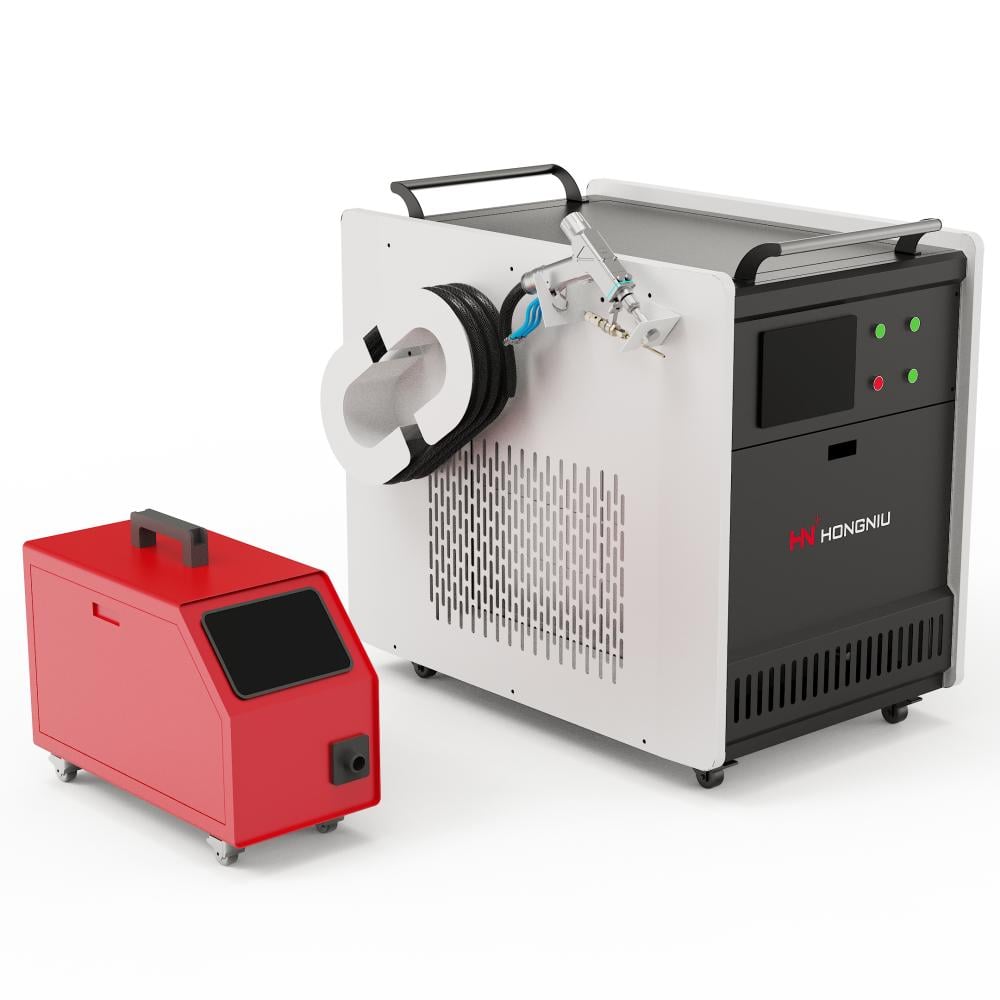
Industrial professionals working with a laser welding machine must recognize that peak performance requires attention to laser specifications, material preparation, fixturing strategy, and post-weld validation. Each factor contributes uniquely to the final weld quality, production speed, and overall system reliability. This comprehensive guide explores the critical factors that determine laser welding machine performance and offers practical insights for manufacturers seeking to maximize their investment in laser welding technology.
Laser Power and Beam Quality as Core Performance Drivers
Understanding Power Output Requirements
The power output of your laser welding machine directly determines penetration depth, welding speed, and material thickness capability. Higher-power systems enable faster processing and deeper fusion zones, yet excessive power without proper beam quality control creates spatter, porosity, and inconsistent welds. A laser welding machine operating at 500 watts performs differently than one operating at 2000 watts, not just in speed but in the metallurgical outcome. The relationship between laser welding machine power and weld quality is non-linear, meaning that doubling power does not automatically double performance gains.
Beam Quality and Focus Characteristics
Beam quality, measured by beam parameter product (BPP), fundamentally affects how tightly a laser welding machine can focus its energy onto the workpiece. Superior beam quality in a laser welding machine enables smaller focus spots, higher energy density, and more precise weld profiles. Fiber laser welding machines typically deliver exceptional beam quality compared to older CO2 technology, making them the preferred choice for precision applications. The focal spot size achieved by your laser welding machine determines the minimum feature size and aspect ratio achievable in your welds.
Material Properties and Surface Preparation
Base Metal Composition and Thickness
The material being welded dramatically influences how a laser welding machine must be configured and operated. Different alloys absorb laser energy at different rates, requiring distinct power levels, pulse durations, and scanning speeds. Aluminum and copper present unique challenges to laser welding machine operators due to their high reflectivity at certain wavelengths, while stainless steel and mild steel respond more predictably. Thickness variations mean that the same laser welding machine settings will produce inadequate penetration in thicker sections or excessive heat input in thin areas.
Surface Cleanliness and Oxidation Control
Surface contamination represents one of the most underestimated factors affecting laser welding machine performance in production environments. Oxides, oils, and particulates reduce energy coupling efficiency, forcing operators to increase laser welding machine power or slow processing speeds to compensate. A laser welding machine working on properly cleaned surfaces achieves better weld quality at lower power settings, extending equipment life and reducing material waste. Pre-weld cleaning protocols directly correlate with the consistency and repeatability of results from any laser welding machine system.
Environmental Conditions and System Integration
Cooling System Effectiveness
The cooling system in a laser welding machine determines thermal stability, duty cycle capability, and long-term reliability. Water-cooled configurations allow sustained high-power operation without thermal throttling, making them essential for production environments. A laser welding machine with inadequate cooling will experience performance degradation during extended runs, reduced beam quality, and potential component damage. The laser welding machine cooling system must maintain optical component temperatures within narrow specifications to preserve beam focus and energy delivery consistency.
Fixturing, Alignment, and Process Control
Workpiece fixturing and alignment accuracy directly determine whether a laser welding machine can deliver its theoretical performance on production parts. Misalignment causes the focus spot to miss the intended joint location, reducing penetration and creating weak welds even when all laser welding machine parameters appear correct. Dynamic feedback systems in modern laser welding machine installations monitor joint position and adjust in real time to maintain consistent weld geometry. Process stability depends not only on the laser welding machine itself but equally on the mechanical and control infrastructure supporting it.
Atmospheric Conditions and Shielding Gas
Air exposure during welding causes oxidation and porosity formation that degrades the quality of laser welding machine output. Shielding gas selection, flow rate, and delivery mechanism directly affect the visual appearance and metallurgical integrity of welds produced by any laser welding machine. Inert gases like argon protect the weld pool from atmospheric contamination, enabling the laser welding machine to achieve its intended material properties. Environmental factors such as drafts, ambient temperature, and humidity also influence how consistently a laser welding machine performs across different production shifts.
Operator Expertise and Process Optimization
Parameter Development and Equipment Training
The skill and experience of personnel operating a laser welding machine profoundly impact actual performance versus theoretical specifications. Proper parameter development requires systematic experimentation to optimize power, pulse frequency, scan speed, and focal position for each specific application. Operators trained on laser welding machine fundamentals recognize how small adjustments create large quality improvements. Companies investing in comprehensive laser welding machine training programs consistently achieve better first-pass quality and faster production ramp times than those treating the technology as simply a tool.
Maintenance and Preventive Calibration
Regular maintenance schedules preserve laser welding machine performance by preventing gradual degradation in beam quality and energy delivery. Optical element contamination, mechanical misalignment, and thermal drift all reduce what a laser welding machine can achieve if left unaddressed. Preventive calibration ensures that laser welding machine parameters remain accurate across months of production use. Systems tracked through structured maintenance programs outperform those operated without disciplined upkeep, delivering superior quality consistency and extended equipment lifespan.
FAQ
How does beam quality affect laser welding machine performance?
Beam quality determines how tightly a laser welding machine can focus energy onto the workpiece. Superior beam quality enables smaller spot sizes, deeper penetration, and more precise weld profiles. Poor beam quality forces operators to use higher power settings to achieve adequate penetration, increasing heat input and reducing weld quality. Fiber laser welding machines provide excellent beam quality, making them ideal for precision applications where laser welding machine focus matters most.
What material properties most impact laser welding machine settings?
Base metal composition, thickness, reflectivity, and thermal conductivity all influence how a laser welding machine must be configured. Materials with high reflectivity like aluminum and copper require different laser welding machine wavelengths or higher power than low-reflectivity materials. Thicker materials need more laser welding machine power or slower speeds to achieve adequate penetration, while thin materials risk burn-through if settings are too aggressive. Surface condition also affects laser welding machine performance, as oxides and contamination reduce energy coupling efficiency.
Why is cooling system performance critical for laser welding machine operation?
A laser welding machine cooling system maintains optical components and laser source within proper temperature ranges to preserve beam quality and prevent thermal throttling. Inadequate cooling forces the laser welding machine to reduce power during extended production runs, degrading throughput and consistency. Water-cooled configurations allow sustained high-power laser welding machine operation without performance loss. Poor cooling directly correlates with reduced beam quality, shortened component lifespan, and higher maintenance costs for any laser welding machine system.
