 EN


The handheld laser welder has emerged as a transformative technology for on-site welding operations across manufacturing, construction, and industrial maintenance sectors. Unlike traditional welding methods that require extensive setup, protective infrastructure, and prolonged downtime, a handheld laser welder delivers precision, speed, and remarkable material efficiency directly at the point of need. This innovation enables technicians to complete complex welding tasks in confined spaces, difficult-to-access areas, and environments where conventional equipment would be impractical or impossible to deploy. The handheld laser welder represents a fundamental shift in how industries approach on-site fabrication, repair, and assembly.
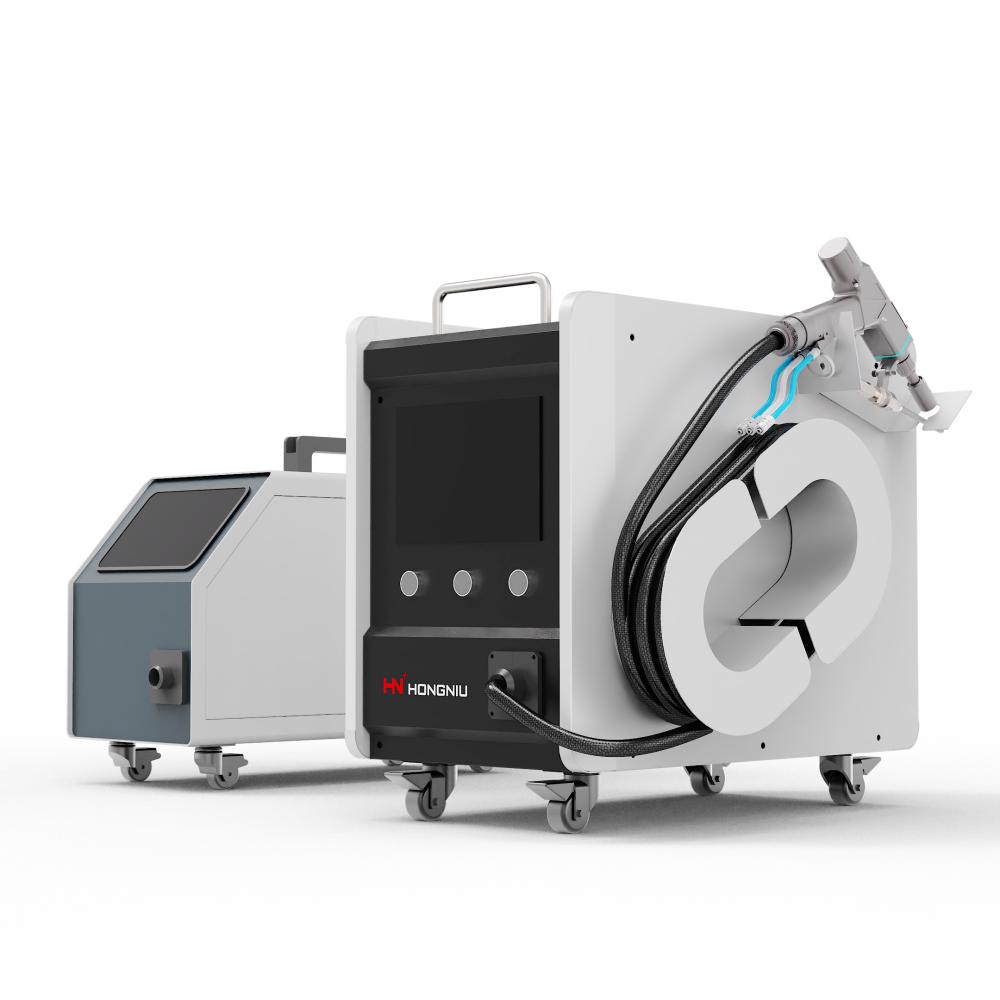
Modern handheld laser welder systems are engineered for portability without compromising performance, making them ideal for field operations where traditional welding infrastructure is unavailable. These devices generate high-intensity laser beams that fuse metal components with minimal thermal distortion, spatter, and post-weld cleanup requirements. The handheld laser welder combines real-time power feedback, intelligent cooling systems, and ergonomic design to ensure consistent results even in challenging on-site environments. Understanding the practical applications and operational advantages of a handheld laser welder is essential for decision-makers evaluating how this technology can enhance their welding capabilities and project timelines.
On-Site Precision Welding with Handheld Laser Technology
Accuracy and Repeatability in Field Conditions
A handheld laser welder delivers exceptional precision by concentrating energy into an extremely narrow focal point, typically measuring less than one millimeter in diameter. This precision means that operators can weld intricate joint geometries, thin-walled components, and densely packed assemblies without damaging adjacent structures or causing unwanted material fusion. The handheld laser welder maintains consistent weld penetration and bead width across multiple passes, reducing the need for rework or post-weld inspection delays. On-site environments often present unpredictable conditions such as temperature fluctuations, vibration, and dust; however, modern handheld laser welder systems incorporate stabilization technologies that maintain beam coherence and focal accuracy regardless of environmental interference.
Material Versatility and Compatibility
The handheld laser welder performs exceptionally well across a diverse range of industrial metals, including stainless steel, aluminum, titanium, copper, and specialized alloys used in aerospace, automotive, and medical device manufacturing. Unlike arc welding, which requires precise material-specific parameters and filler material compatibility, a handheld laser welder achieves full-strength fusion through rapid, localized heating that minimizes oxidation and requires minimal post-weld treatment. Dissimilar metal joints that would traditionally require intermediate filler materials or complex procedures can often be executed cleanly using a handheld laser welder, provided the thermal characteristics of both materials are compatible. This material flexibility makes the handheld laser welder an invaluable tool for organizations managing diverse supply chains and manufacturing specifications on construction sites or field repair locations.
Efficiency Gains and Cost-Benefit Analysis for On-Site Operations
Reduced Setup Time and Labor Requirements
Traditional on-site welding operations demand extensive preparation, including power infrastructure, ventilation systems, protective barriers, and specialized scaffolding. A handheld laser welder eliminates most of this overhead by operating from standard electrical sources and requiring minimal environmental conditioning. Setup time for a handheld laser welder typically ranges from minutes rather than hours, and single operators can manage complex welding tasks that would ordinarily require multiple technicians with traditional equipment. This efficiency directly translates to accelerated project timelines, particularly critical in maintenance scenarios where equipment downtime translates to production losses and revenue impact. Organizations deploying a handheld laser welder on-site experience tangible reductions in labor costs, project duration, and associated overhead expenses.
Minimal Material Waste and Spatter Control
The concentrated energy delivery of a handheld laser welder produces weld beads with substantially lower spatter rates compared to arc or MIG welding methods. This characteristic is particularly valuable on-site, where spatter cleanup and environmental contamination represent hidden costs and safety risks. A handheld laser welder deposits metal more efficiently because the laser couples energy directly to the base materials rather than relying on consumable filler materials and shielding gases that add cost and complexity. The reduced heat-affected zone surrounding welds created by a handheld laser welder means less distortion in surrounding material, lower residual stress, and improved structural integrity in finished components. For on-site operations where scrap material and rework represent significant financial impacts, the efficiency profile of a handheld laser welder delivers measurable competitive advantage.
Practical Field Applications and Industry Implementation
Aerospace and Aviation Maintenance
Aviation maintenance operations routinely encounter handheld laser welder requirements for repairing fuselage components, landing gear assemblies, and hydraulic system connections. The precision inherent to a handheld laser welder allows technicians to repair aluminum aircraft skin with minimal distortion, preserving structural geometry and aerodynamic characteristics. Many aerospace facilities now deploy portable handheld laser welder systems directly at maintenance hangars, eliminating expensive component transportation and enabling rapid turnaround on scheduled maintenance. The materials compatibility of a handheld laser welder extends across titanium alloys, dissimilar metal connections, and specialized aluminum composites commonly encountered in aircraft structures.
Automotive Manufacturing and Field Assembly
Automotive assembly operations have adopted handheld laser welder technology for joining battery enclosures, heat shield attachments, and electrical connector housings in electric vehicle manufacturing. A handheld laser welder enables workers to execute precise welds in tight engine compartments and confined assembly stations where traditional torch or MIG welding equipment cannot physically access the joint. The speed and repeatability of a handheld laser welder support high-volume production targets while maintaining the strict quality standards demanded by automotive tier-one suppliers and original equipment manufacturers.
Industrial Repair and On-Site Fabrication
Manufacturing facilities and heavy equipment operators increasingly deploy handheld laser welder systems for urgent repairs of industrial machinery, pressure vessels, and structural components. The portability and minimal setup requirements of a handheld laser welder make it possible to execute field repairs without dismantling equipment or scheduling extended shutdown windows. Construction projects utilize handheld laser welder technology to join structural steel components, reinforce load-bearing connections, and execute architectural metalwork in confined building spaces where traditional welding equipment cannot be safely positioned or operated.
FAQ
What safety considerations apply when operating a handheld laser welder on-site?
Operating a handheld laser welder requires comprehensive safety protocols including laser-certified eye protection, restricted access zones, and proper grounding procedures. Operators must receive formal training in handheld laser welder beam characteristics, emergency shutdown procedures, and material-specific hazards. On-site handheld laser welder deployment demands compliance with OSHA guidelines, facility safety standards, and equipment-specific manufacturer protocols. Proper ventilation for metal vapor and setup of physical barriers protecting nearby personnel from laser exposure are non-negotiable requirements for handheld laser welder operations in industrial environments.
How does maintenance differ between handheld laser welder systems and traditional welding equipment?
A handheld laser welder requires periodic maintenance of optical components, cooling systems, and laser tube alignment to maintain performance consistency. Unlike consumable-based welding methods, a handheld laser welder demands less frequent replacement of wear items, though optical lenses and cooling fluid replacement occurs on scheduled intervals. Many modern handheld laser welder manufacturers provide remote diagnostics and predictive maintenance alerts through integrated software platforms, allowing operators to schedule maintenance proactively and minimize unplanned downtime. Training technicians on handheld laser welder maintenance procedures represents an initial investment, but the extended operating life and reduced consumable consumption ultimately deliver lower total cost of ownership.
Can a handheld laser welder achieve consistent results across varying on-site environmental conditions?
Modern handheld laser welder systems incorporate environmental compensation algorithms that adjust power output, pulse duration, and cooling intensity based on real-time feedback sensors detecting ambient temperature, humidity, and material surface conditions. A handheld laser welder maintains weld quality consistency across outdoor construction sites, temperature-controlled industrial facilities, and extreme environments through adaptive control systems and robust thermal management. Field-proven handheld laser welder implementations demonstrate repeatability specifications exceeding 98% across diverse environmental scenarios, making this technology reliable for mission-critical on-site welding applications.
