 EN


A handheld laser welder represents one of the most significant advances in modern welding technology. Unlike traditional arc welding or MIG processes, a handheld laser welder uses a concentrated beam of coherent light to join metal surfaces with exceptional precision and minimal distortion. This innovation has revolutionized how manufacturers, repair technicians, and fabrication specialists approach welding tasks across industries ranging from automotive to jewelry production. The handheld laser welder delivers superior weld quality, faster processing speeds, and cleaner results compared to conventional welding methods, making it an increasingly popular choice for businesses seeking competitive advantages in precision work.
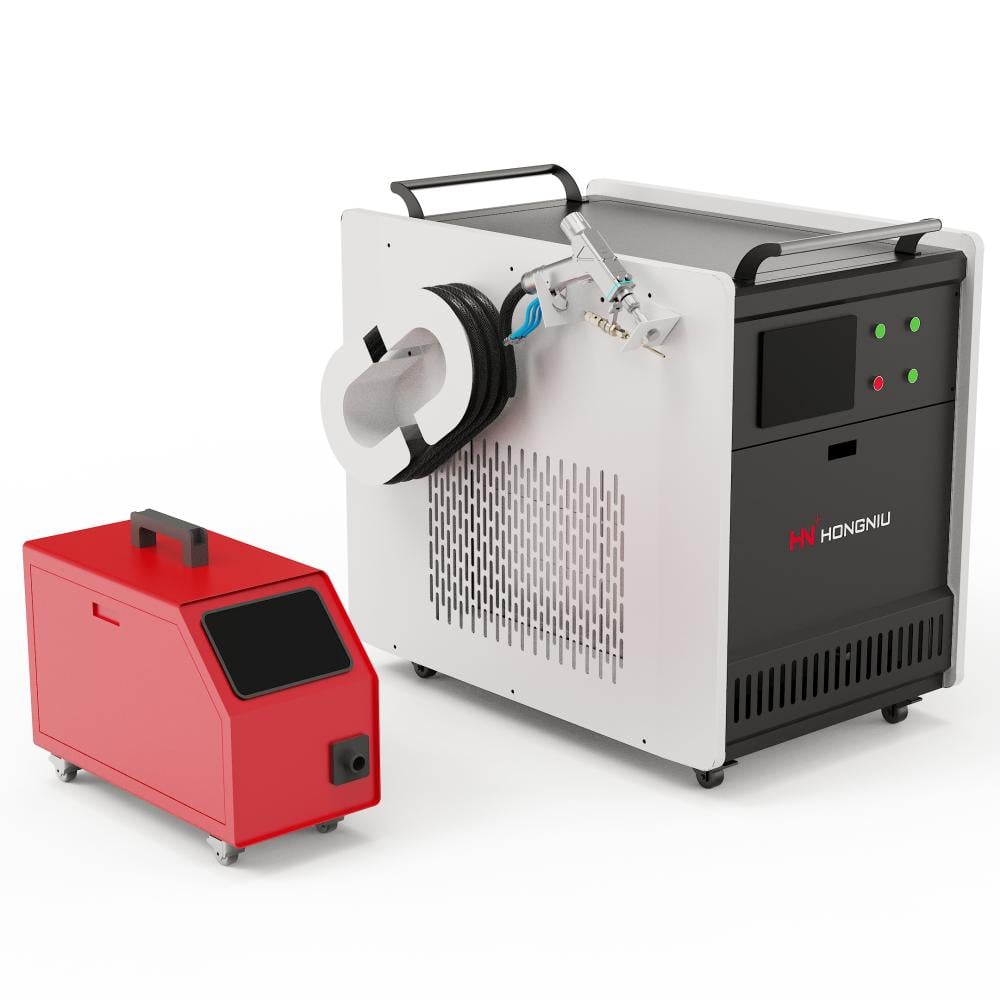
Understanding how a handheld laser welder functions requires examining both the technology behind the tool and the practical principles governing laser-metal interactions. This guide explores the core mechanics of handheld laser welders, their operational advantages, and why they have become essential equipment in modern industrial settings. Whether you work in manufacturing, restoration, or custom fabrication, learning about handheld laser welder capabilities will help you understand this transformative technology and its potential applications in your operations.
How a Handheld Laser Welder Functions
Laser Generation and Beam Delivery
A handheld laser welder operates by generating a high-powered coherent light beam through fiber laser technology or other laser sources housed in a main processing unit. The laser beam travels through a fiber optic cable connected to the handheld welding head, allowing operators to direct the beam precisely onto the workpiece. Inside a handheld laser welder, specialized optics focus this beam to an extremely small spot size, typically measuring just a few millimeters in diameter. When the concentrated beam strikes the metal surface, it generates intense heat capable of reaching thousands of degrees in microseconds, causing the metal to melt and fuse.
Metal Fusion and Cooling Process
The handheld laser welder creates welds through rapid heating and controlled cooling cycles that bond metals at the molecular level. As the handheld laser welder focuses its beam on the joint area, the metal reaches its melting point almost instantaneously, forming a molten pool. The operator moves the handheld laser welder along the joint line, progressively joining the material with remarkable precision. Once the beam passes and heat dissipates, the molten metal cools quickly, solidifying into a strong weld that often requires no additional post-processing. This rapid thermal cycle minimizes heat-affected zones compared to traditional arc welding, reducing stress and distortion in the finished workpiece.
Key Advantages of Using a Handheld Laser Welder
Superior Precision and Quality Control
A handheld laser welder enables operators to achieve weld precision impossible with conventional welding equipment. The focused beam of a handheld laser welder can target exact joint locations without unnecessary heat dispersion, resulting in consistent, high-quality welds on both thick and thin materials. Because a handheld laser welder produces minimal thermal distortion, parts maintain their original dimensions and structural integrity. Industries requiring tight tolerances, such as aerospace and medical device manufacturing, frequently depend on handheld laser welder technology to meet strict quality standards and reduce scrap rates.
Speed and Productivity Improvements
The operational efficiency of a handheld laser welder significantly outpaces traditional arc welding methods in many applications. A handheld laser welder completes welds faster due to the concentrated energy delivery and minimal cooling time required. Operators using a handheld laser welder spend less time on secondary cleanup, grinding, or rework since the weld quality is superior from the first pass. This speed translates directly to increased throughput, allowing facilities to process more parts in less time and reducing labor costs per unit produced.
Versatility Across Materials and Thicknesses
A handheld laser welder performs exceptionally well on materials where traditional welding proves challenging or impossible. Whether working with stainless steel, aluminum, copper, titanium, or exotic alloys, a handheld laser welder adapts to different metals without extensive setup changes. The handheld laser welder handles both thin foils and thicker sections by adjusting beam power and travel speed, making it ideal for mixed-material assemblies common in modern manufacturing.
Practical Applications and Industrial Use Cases
Manufacturing and Fabrication Industries
A handheld laser welder has become indispensable in automotive manufacturing, electronics assembly, and precision fabrication shops worldwide. Manufacturers use a handheld laser welder to join battery components, create watertight seals, and perform intricate repairs on finished products. The handheld laser welder's ability to work on small, detailed assemblies makes it invaluable in industries where conventional welding equipment cannot access confined spaces or work on delicate components.
Repair and Restoration Work
Professionals in restoration and repair fields benefit greatly from handheld laser welder technology's non-invasive characteristics. A handheld laser welder can repair jewelry, restore antique items, and fix high-value parts without damaging surrounding material or affecting finishes. The precision of a handheld laser welder means operators can work on surfaces near sensitive components without collateral heat damage, a capability traditional methods cannot match.
Custom and Prototype Development
Design engineers and prototype developers rely on handheld laser welder systems for rapid development cycles. A handheld laser welder allows quick iterations on joint designs and assembly methods without lengthy setup times. The flexibility of a handheld laser welder supports experimentation and problem-solving during the design phase, accelerating time to market for new products.
Technical Considerations and Operational Factors
Power Requirements and System Integration
A handheld laser welder system requires stable electrical power and proper cooling infrastructure to function optimally. Most handheld laser welder installations include a main laser source, power supply, cooling unit, and control interface connected to the handheld welding head. Installing a handheld laser welder involves ensuring adequate ventilation for any fumes and implementing appropriate safety protocols around the laser beam. Facility planners must account for these infrastructure requirements when integrating a handheld laser welder into existing manufacturing environments.
Operator Training and Safety Protocols
Operating a handheld laser welder safely requires specialized training and strict adherence to safety guidelines. Operators must understand laser safety principles, proper eyewear requirements, and safe handling procedures specific to handheld laser welder equipment. Unlike traditional welding, a handheld laser welder poses unique hazards from invisible laser radiation, requiring protective measures and controlled work environments. Facilities implementing handheld laser welder technology must establish comprehensive training programs and maintain consistent safety protocols to protect personnel.
FAQ
What materials can a handheld laser welder join effectively?
A handheld laser welder works with virtually any conductive metal, including stainless steel, aluminum, copper, titanium, brass, and specialty alloys. The handheld laser welder's adaptability to different materials without major equipment changes makes it extremely versatile. However, materials with very high reflectivity may require specialized settings or surface treatments for optimal handheld laser welder performance.
How does the cost of handheld laser welder equipment compare to traditional welding systems?
Initial investment in a handheld laser welder system typically exceeds traditional arc welding equipment, but the longer-term value proposition often justifies the cost. Reduced material waste, faster cycle times, and minimal rework with a handheld laser welder generate significant return on investment in high-precision applications. Many facilities find that a handheld laser welder pays for itself through improved productivity and quality within one to three years of operation.
Can a handheld laser welder be integrated into automated production lines?
Yes, advanced handheld laser welder systems can be adapted for semi-automated and fully automated processes through robotic arm integration or fixture-based positioning. While portable handheld laser welder units excel at manual precision work, industrial versions can be incorporated into larger manufacturing systems. This flexibility makes a handheld laser welder suitable for both custom job shops and high-volume production environments.
